Category: Infrastructure & Scalable Growth

  • How to Avoid the Biggest Pitfalls in Healthcare Infrastructure Development

    How to Avoid the Biggest Pitfalls in Healthcare Infrastructure Development

    In the rapidly evolving landscape of 2026, the demand for sophisticated, resilient, and compliant medical facilities has never been higher. For regulated agencies and private healthcare firms alike, healthcare infrastructure development is no longer merely a matter of real estate and construction; it is a critical strategic imperative that dictates the capacity for scalable growth healthcare.

    At LAP Strategies and Consulting, LLC, we recognize that the path to operational excellence is often obstructed by foundational errors made during the earliest phases of development. Whether you are expanding a multi-specialty clinic or retrofitting an existing facility to meet new regulatory standards, the stakes are exceptionally high. Infrastructure failures do not just result in budget overruns, they compromise patient safety, jeopardize data security, and stifle revenue velocity.

    To ensure your organization remains competitive and compliant, we must examine the most frequent oversights in modern healthcare development and establish a proactive framework for success.

    The High Cost of Retroactive Planning

    One of the most pervasive pitfalls in the industry is treating infrastructure as a static backdrop rather than a dynamic component of clinical delivery. Many organizations approach facility design with a "build now, integrate later" mentality, particularly regarding Information Technology (IT) and specialized medical systems.

    Delayed IT integration: Bringing in IT specialists after the structural elements are finalized is a recipe for fiscal disaster. When fiber optic pathways, power redundancy systems, and cooling requirements for server rooms are treated as an afterthought, the result is expensive retrofitting. In 2026, where digital transformation is the standard, a facility's physical shell must be designed around its technological nervous system.

    Modern medical facility design showing integrated digital infrastructure and cabling for scalable healthcare growth.

    Pitfall #1: Neglecting Scalable Connectivity and High-Density Cabling

    As we navigate the demands of modern medicine, the reliance on high-bandwidth applications, ranging from real-time imaging to AI-driven diagnostic tools, has grown exponentially. A common error in healthcare infrastructure development is underestimating the volume of data that will transit the network five or ten years down the line.

    • Inadequate cabling infrastructure: Utilizing lower-grade cabling to save on initial capital expenditures often forces organizations to make future clinical decisions based on technical limitations rather than patient needs. We recommend investing in high-density, scalable architecture that supports both physical and wireless (802.11) high-speed networks.
    • Wireless coverage gaps: In a regulated environment, interruptions in communication can lead to sentinel events. Ensuring comprehensive Wi-Fi and cellular supplementation is non-negotiable for maintaining operational efficiency.

    Pitfall #2: Misalignment Between Physical Design and Clinical Workflow

    A technically advanced building is a failure if it hinders the people working inside it. Designing infrastructure in isolation from actual clinical workflows creates "friction points" that erode staff morale and patient satisfaction.

    Operational bottlenecks: If nurse stations are poorly positioned or if the "Intake to Start of Care" pathway is physically fragmented, your revenue velocity will suffer. We often see agencies stall at certain revenue milestones simply because their physical layout cannot handle an increased patient load efficiently.

    Zoning and contamination control: For regulated agencies, the separation of clean and contaminated zones is a matter of strict compliance. Failure to integrate these requirements into the primary architectural plan can lead to failed audits and increased healthcare-associated infections (HAIs).

    Efficient clinical workflow layout in a modern healthcare facility designed for operational excellence.

    Pitfall #3: Data Fragmentation and the "Information Island" Effect

    Modern healthcare consulting emphasizes the need for a "single source of truth." However, many infrastructure projects suffer from fragmented data management. Finance teams use one ERP, construction teams use separate spreadsheets, and facilities management operates on a third, disconnected system.

    • Information silos: When data is not integrated, reporting becomes inaccurate. This leads to conflicting versions of project progress and spending, often resulting in massive cost overruns.
    • Governance structures: Implementing robust governance early ensures that every stakeholder, from the CEO to the head of nursing, has real-time visibility into the infrastructure’s performance and compliance status. For more on this, explore our insights on essential systems for healthcare firms.

    Pitfall #4: Overlooking Environmental and Utility Resilience

    In an era of climate volatility and rising energy costs, failing to prioritize utility redundancy is a significant risk. For regulated agencies, a power failure is not just an inconvenience; it is a liability.

    Critical system failures: Overloaded electrical circuits, poor HVAC zoning for sensitive equipment, and inadequate medical gas pipeline integration are frequent technical pitfalls. Facilities must be designed with sufficient backup power systems and energy-efficient mechanisms to maintain long-term sustainability.

    Industrial utility room with healthcare backup power systems and HVAC units for facility resilience.

    Strategic Solutions: A Directive for Regulated Agencies

    To avoid these pitfalls, we advise a shift from reactive construction to proactive healthcare infrastructure development. As strategic advisors, we recommend the following directive:

    1. Assess and Audit Early: Before the first shovel hits the ground, conduct a comprehensive audit of your current technological and clinical needs. Use our framework to identify potential bottlenecks.
    2. Collaborate Across Disciplines: Ensure that IT, clinical staff, and facilities management are at the table during the initial design phase. This cross-functional collaboration prevents the "retrofit" trap.
    3. Invest in Modular Systems: Use flexible, modular designs that allow for rapid technological upgrades without requiring major structural renovations.
    4. Prioritize Regulatory Compliance: Treat HIPAA, HITECH, and building safety codes as foundational design principles, not final checkboxes.

    Frequently Asked Questions (FAQ)

    Why is IT involvement necessary during the architectural design phase?

    IT infrastructure, including server cooling, cabling pathways, and wireless access point placement, requires specific structural accommodations. Delaying this involvement leads to expensive modifications and inefficient technology placement.

    How does infrastructure impact "Revenue Velocity"?

    Efficient physical layouts reduce the time between patient intake and the start of care. When infrastructure supports a smooth workflow, the agency can process more patients with higher accuracy, directly impacting the bottom line. You can learn more about this in our Intake to SOC Framework.

    What are the most common compliance mistakes in facility development?

    Common mistakes include inadequate data security controls (like biometric access to server rooms), poor separation of sterile environments, and failure to provide redundant power for life-sustaining equipment.

    Can old facilities be retrofitted for scalable growth?

    Yes, but it requires a strategic approach. Retrofitting involves auditing existing utility capacities and identifying where modular technology can be integrated without disrupting current clinical operations.

    Concluding Insights

    The journey toward scalable growth healthcare is paved with strategic decisions made long before a facility opens its doors. By avoiding the pitfalls of late-stage planning, fragmented data governance, and clinical misalignment, you position your organization for long-term resilience and operational excellence.

    As we look toward the future of the industry, the agencies that thrive will be those that view their physical and digital infrastructure as a unified, strategic asset. If you are ready to audit your current strategy or begin a new development project, we invite you to book a strategy call with our team.

    Actionable Steps for Your Next Project:

    • Establish a steering committee comprising IT, clinical, and financial leadership.
    • Develop a 10-year technology roadmap that anticipates advancements in AI and telehealth.
    • Conduct a risk assessment focused on utility redundancy and data security.
    • Engage a healthcare consultant to align your infrastructure with current industry trends.

    Sustainable success in healthcare requires a foundation that is as robust as the care you provide. Let us build that foundation together.
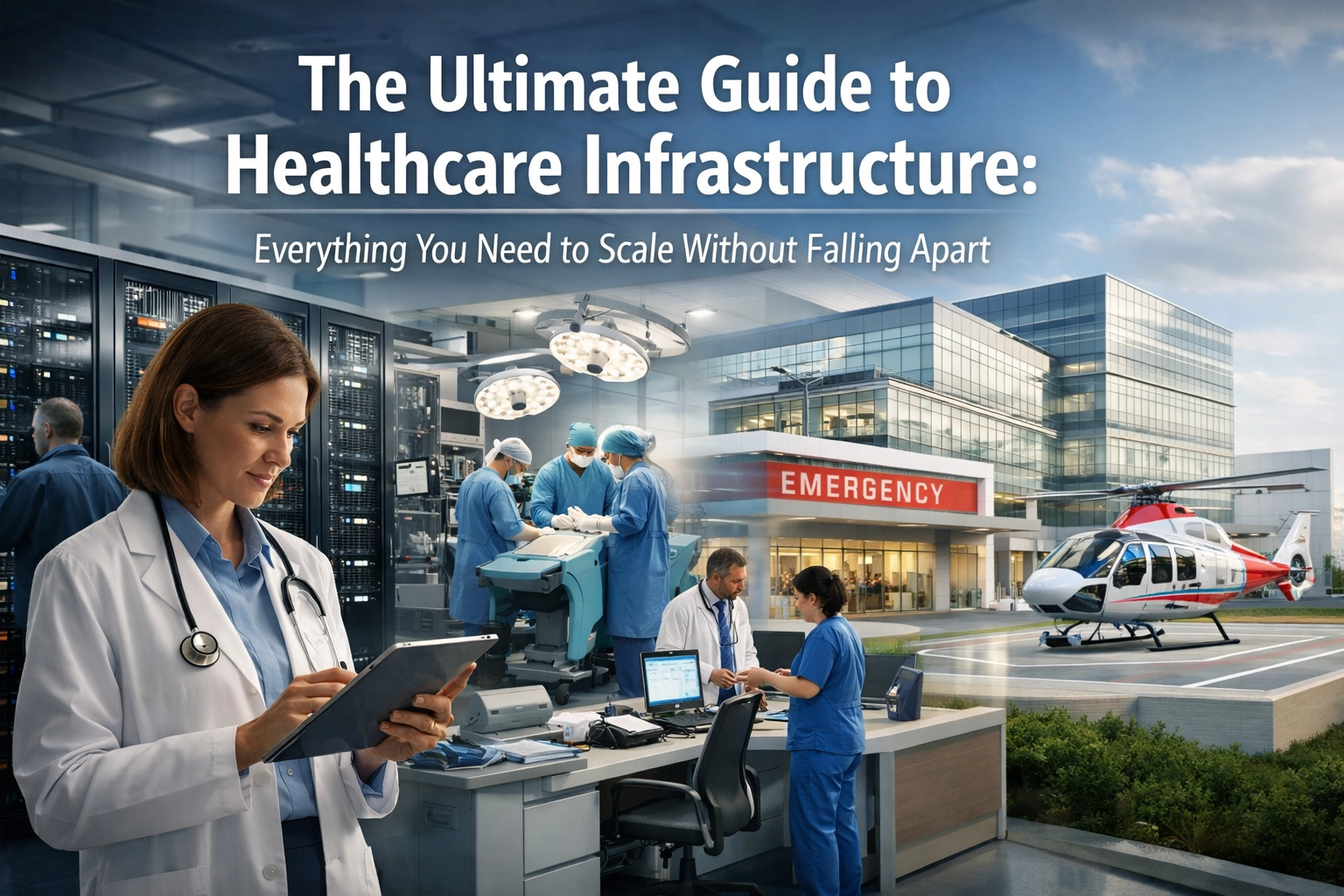
  • The Ultimate Guide to Healthcare Infrastructure: Everything You Need to Scale Without Falling Apart

    The Ultimate Guide to Healthcare Infrastructure: Everything You Need to Scale Without Falling Apart

    Growth is a seductive metric. For many healthcare agencies, the sight of a rising patient census or a spike in referrals feels like the ultimate validation. But without a robust operational foundation, growth is not a victory: it is a liability.

    We have seen it happen repeatedly: a high-performing agency hits the $2M revenue mark and suddenly, the wheels start to wobble. Documentation lags, staff turnover spikes, and the once-seamless patient experience begins to fray at the edges. This is the "scaling trap." When your volume outpaces your infrastructure, you don't just stop growing; you begin to fall apart.

    At LAP Strategies and Consulting, LLC, we recognize that true operational excellence isn’t about working harder; it’s about building a system that works for you. To scale successfully in a regulated environment, you must move beyond reactive management and embrace a structured, infrastructure-first approach.

    The Invisible Ceiling: Why Healthcare Agencies Stall

    Most healthcare organizations are built on the back of heroic individual efforts. The founder or a handful of key administrators handle everything from intake to billing. However, this manual approach has a hard limit. As you expand, the complexity of managing a regulated agency grows exponentially, not linearly.

    Systemic bottlenecks: When your processes rely on specific people rather than documented systems, every new patient adds a layer of friction. If your intake process isn't standardized, your "time to care" slows down, leading to what we call revenue leakage.

    Predictable performance: A scalable agency is one where the outcome is predictable regardless of who is performing the task. Without this, growth leads to a decline in quality, which in a healthcare setting, translates to compliance risks and poor patient outcomes.

    efficiency-control-console.webp

    The Technical Blueprint: Building for 10x Demand

    In the modern healthcare landscape, your technical architecture is either a launchpad or an anchor. Many agencies are still tethered to legacy systems: fax machines, manual spreadsheets, and siloed databases: that cannot communicate with one another. To scale without falling apart, your technology stack must be built with modularity and interoperability at its core.

    Cloud-native infrastructure: Relying on on-premise hardware is a recipe for disaster during a growth phase. Cloud-based systems allow you to scale resources up or down in real-time. This flexibility ensures that your system remains responsive even as your data load triples.

    System interoperability: Your EHR, billing software, and CRM must speak the same language. By utilizing standards like HL7 and FHIR, you ensure consistent data formats, which reduces manual entry errors and accelerates the billing cycle.

    Security-first design: In a regulated industry, scaling your data means scaling your risk. A robust infrastructure incorporates layered defenses, including encrypted databases and Identity and Access Management (IAM) policies, ensuring that every new patient record is protected by HIPAA-compliant protocols.

    Secure digital healthcare infrastructure and data center supporting scalable operations and HIPAA compliance.

    The Operational Engine: The Intake-to-SOC Framework

    You cannot scale what you cannot measure. In healthcare, the most critical workflow is the journey from initial referral to the Start of Care (SOC). We call this the "Intake-to-SOC Framework," and it is the single greatest determinant of your revenue velocity.

    When infrastructure is weak, referrals sit in an inbox for days. Eligibility checks are missed. Authorizations are delayed. Each of these friction points represents lost revenue. To fix this, you must treat your operations like a high-precision assembly line.

    1. Automated Eligibility : Stop wasting clinical hours on administrative phone calls. Implement automated verification systems that flag issues before the clinician ever steps into the patient’s home.
    2. Standardized Documentation: Create a "single source of truth" for patient data. This prevents the fragmented communication that leads to audit failures.
    3. Capacity Management: Your schedule should be "comfortably full," not overflowing. Infrastructure allows you to see the "cliff" before you walk over it, giving you the lead time needed to recruit and onboard new staff before the quality of care drops.

    Eliminating Revenue Leakage Through Systematic Oversight

    Revenue leakage is the silent killer of growing healthcare firms. It isn’t usually one big mistake; it’s a thousand small "paper cuts." A missed authorization here, a coding error there, and a late filing for a claim. Before you know it, your margins have evaporated.

    Automated Billing Cycles: By integrating your clinical documentation with your billing engine, you can trigger claims the moment a visit is verified. This reduces the Days Sales Outstanding (DSO) and ensures that your cash flow supports your expansion efforts.

    Vendor Compliance: As you scale, you will rely more on third-party vendors. Without a framework to manage these relationships, you expose your agency to data breaches and service interruptions. A solid infrastructure includes a "Quick-Start Guide to Vendor Compliance" to ensure every partner meets your internal standards.

    digital-efficiency-chatgpt-logo-blue-orange-gradient.webp

    The Role of Strategic Partnerships in Sustainable Growth

    No healthcare leader should attempt to build this level of infrastructure alone. The transition from a small practice to a regional powerhouse requires specialized skills in cloud engineering, cybersecurity, and operational modernization.

    Resource Augmentation: Leveraging managed services allows your internal team to focus on high-value clinical work while experts handle the system monitoring, patching, and compliance auditing. This reduces the risk associated with staff turnover and ensures that your technical "institutional knowledge" isn't lost if a key IT person leaves.

    Objective Gap Analysis: It is difficult to see the cracks in your own foundation while you are busy running the business. Engaging with a firm like LAP Strategies and Consulting, LLC provides an objective view of your operations, identifying the bottlenecks that are holding you back from your next $5M or $10M milestone.

    virtual-collaboration-setup.webp

    Frequently Asked Questions (FAQ)

    1. How do I know if my current infrastructure is failing?

    If your administrative staff is consistently working overtime to keep up with current volume, or if your "Time to Start of Care" is increasing as you take on more patients, your infrastructure is likely at its breaking point.

    2. Can we scale using our existing manual processes?

    Only to a certain point. Most agencies stall at the $2M mark because manual processes do not scale linearly. The effort required to manage 100 patients manually is often five times greater than managing 20, leading to a total collapse of operational control.

    3. What is the first step in upgrading our healthcare infrastructure?

    Start with a comprehensive audit of your Intake-to-SOC workflow. This is where the most significant revenue leakage occurs and where improvements provide the fastest return on investment.

    4. Is cloud infrastructure safe for sensitive patient data?

    Yes. In fact, modern cloud-native infrastructures are often more secure than on-premise servers because they offer automated patching, advanced encryption, and 24/7 monitoring that small internal IT teams cannot replicate.

    Concluding Insights: Your Roadmap to Resilient Growth

    Scaling a healthcare agency without a solid infrastructure is like trying to build a skyscraper on a foundation of sand. It might look impressive for a few stories, but the collapse is inevitable. To build a legacy of care and financial success, you must prioritize the systems that support your people.

    If you are ready to stop the "chaos-and-collapse" cycle and start building for predictable, sustainable success, here are your actionable next steps:

    • Assess your current capacity: Determine exactly how many more patients your current intake team can handle before the process breaks.
    • Identify your "Single Points of Failure" : Note any process that relies entirely on the memory or presence of one specific person.
    • Invest in Interoperability: Review your current software stack and identify where data is being manually "bridged" between systems.
    • Collaborate with Experts: Don't wait for an audit or a revenue crisis to fix your foundation.

    At LAP Strategies and Consulting, LLC, we help healthcare organizations navigate the complexities of strategy, structure, and sustainable growth. Your mission is to provide exceptional care; our mission is to build the infrastructure that makes that care possible at scale.

    Ready to shore up your foundation? Book a strategy call with us today and let’s turn your growth into a stable, profitable reality.

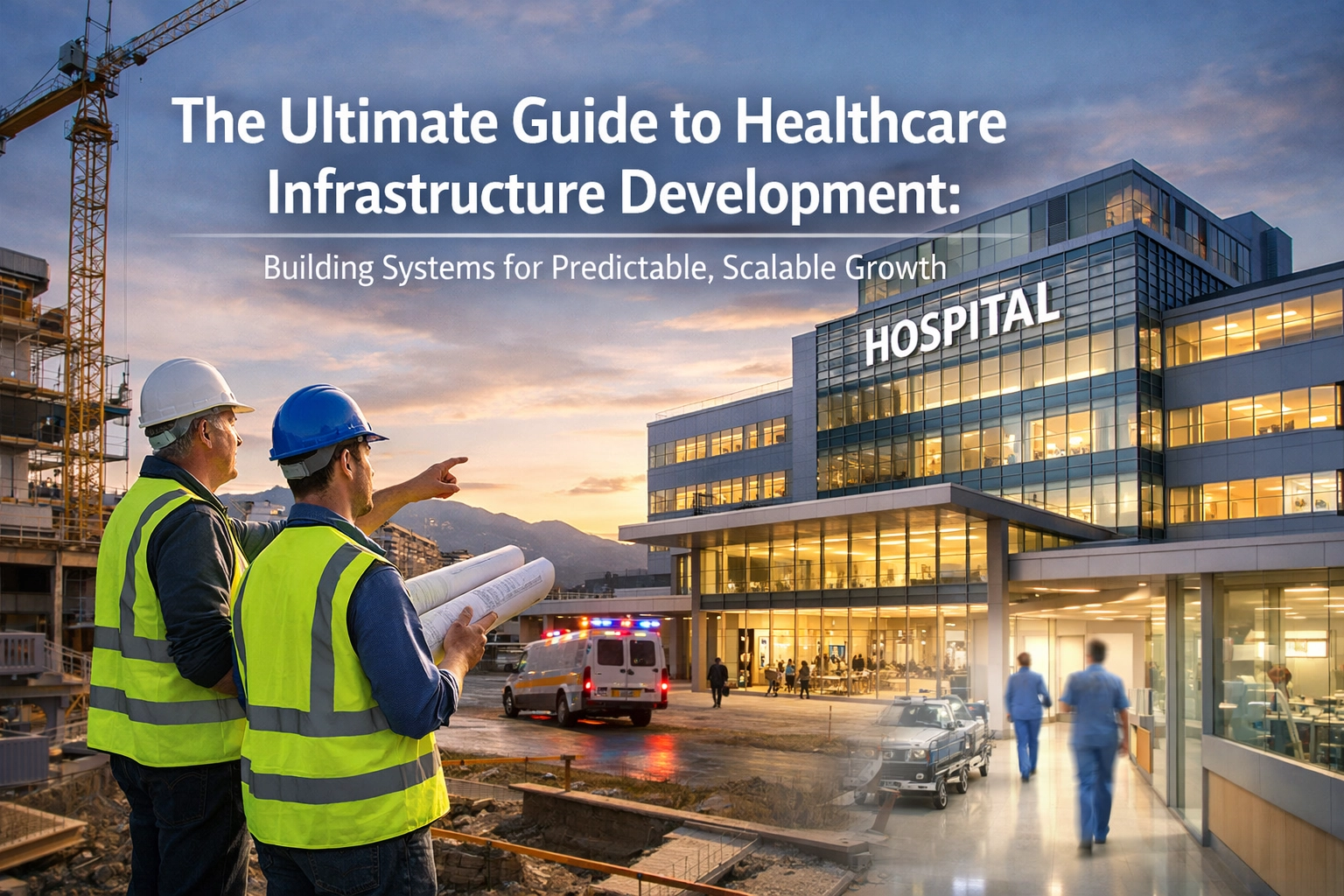
  • The Ultimate Guide to Healthcare Infrastructure Development: Building Systems for Predictable, Scalable Growth

    The Ultimate Guide to Healthcare Infrastructure Development: Building Systems for Predictable, Scalable Growth

    In the rapidly evolving landscape of 2026, healthcare organizations are finding that traditional operational models are no longer sufficient to sustain long-term viability. As the industry shifts toward higher levels of digital integration and more stringent regulatory oversight, the concept of "infrastructure" has expanded far beyond the physical walls of a clinic or hospital. Today, healthcare infrastructure represents the comprehensive ecosystem of technological systems, clinical workflows, and administrative frameworks that allow an agency to function with precision.

    At LAP Strategies and Consulting, LLC, we have observed that the primary differentiator between agencies that struggle and those that achieve exponential growth is the robustness of their underlying infrastructure. Without a scalable foundation, growth often leads to chaos: resulting in operational bottlenecks, clinician burnout, and significant revenue leakage. This guide explores the strategic imperatives for building a predictable healthcare infrastructure capable of supporting sustainable growth.

    The Architectural Shift: Moving Toward Flexible Design

    Modern healthcare infrastructure development requires an integrated approach that prioritizes flexibility. Whether you are managing a homecare agency or a multi-specialty facility, the ability to adapt to changing patient demographics and emerging medical technologies is critical.

    Future-proof physical planning: When developing or reconfiguring physical spaces, it is essential to design for a 50-year lifespan. This involves incorporating modular layouts and expandable service areas that can accommodate new equipment without requiring a complete structural overhaul.

    Integrated service delivery networks: Rather than operating in silos, infrastructure must facilitate the seamless movement of patients through the care continuum. By co-locating related services and establishing clear access routes for staff and patients, organizations can significantly improve timeliness and clinical outcomes.

    efficiency-control-console.webp

    Digital Transformation and Process Optimization

    In 2026, infrastructure is as much digital as it is physical. The integration of advanced AI and automated systems is no longer a luxury: it is a requirement for maintaining a competitive edge. Strategic digital transformation allows for the automation of repetitive administrative tasks, freeing up human capital for high-value clinical engagement.

    Leveraging Building Information Modeling (BIM): Utilizing digital tools to visualize design choices before implementation reduces construction costs and improves accuracy. This transparency ensures that the physical infrastructure directly supports the intended operational workflows.

    Automated solutions for compliance: Digital infrastructure should include built-in compliance checks that flag potential issues before they escalate. By integrating AI-driven monitoring, agencies can ensure that documentation meets regulatory standards consistently, reducing the risk of CMS penalties.

    Eliminating Bottlenecks and Reducing Revenue Leakage

    The most common threat to scalable growth is the presence of invisible bottlenecks within the administrative process. Many healthcare firms experience significant revenue leakage during the transition from patient intake to the start of care (SOC).

    Identifying the "Leaky Bucket" syndrome: Revenue leakage often occurs when data is lost between departments or when authorization delays prevent timely service delivery. By conducting a thorough operational assessment, leadership can identify exactly where financial resources are being wasted.

    The Intake-to-SOC framework: Implementing a standardized Intake-to-SOC framework is essential for increasing revenue velocity. This framework ensures that every step of the patient journey is documented, tracked, and optimized for speed and accuracy.

    Structural scalability: It is a well-documented phenomenon that many healthcare agencies stall at $2M in revenue. This plateau is typically reached when the founder's personal involvement can no longer compensate for a lack of formal systems. Overcoming this hurdle requires shifting from a "person-dependent" model to a "system-dependent" model.

    virtual-collaboration-setup.webp

    Governance and Seven-Day Service Delivery

    Effective infrastructure development includes the creation of governance structures that coordinate both planned and unplanned care. In a dynamic healthcare environment, your systems must be resilient enough to handle fluctuations in patient volume without compromising the quality of care.

    Cross-disciplinary leadership: Infrastructure success relies on early collaboration between physicians, nurses, and administrative leadership. This inclusive approach ensures that the systems being built are grounded in clinical reality.

    Financial integration and risk management: By integrating primary care and hospital budgets, organizations can reduce duplication of services. Shared financial risk models incentivize efficiency and ensure that every patient interaction adds demonstrable value to the care pathway.

    Standardized operational procedures (SOPs): To achieve predictable growth, every task within the organization must have a corresponding SOP. This level of operational optimization ensures that as you hire new staff, they can be onboarded and integrated into your culture of excellence with minimal friction.

    Strategic Stakeholder Engagement

    Building infrastructure is not a solitary endeavor. It requires the active participation of all stakeholders, from frontline staff to general contractors and technology vendors.

    Clinical input in design: Medical professionals understand patient flow better than anyone else. Their input into the layout of treatment areas and the design of digital interfaces is critical to preventing costly revisions later in the development process.

    Community-centric infrastructure: Healthcare infrastructure should be built to serve the specific needs of the local population. This means assessing regional health trends and ensuring the facility is equipped to handle the most prevalent conditions in the area.

    Healthcare stakeholders and a physician collaborating on strategic hospital infrastructure development.

    Frequently Asked Questions (FAQ)

    How do we identify the specific bottlenecks in our current infrastructure?
    We recommend a comprehensive operational audit that tracks the patient journey from the first point of contact through to discharge. By measuring the time and resources spent at each stage, we can pinpoint precisely where the delays are occurring.

    Why is infrastructure the key to scaling past the $2M revenue mark?
    At lower revenue levels, an agency can often survive on the grit and talent of its leadership. However, scaling requires repeatability. Infrastructure provides the essential systems that allow the business to run independently of the owner’s constant intervention.

    How does digital infrastructure help with CMS compliance?
    Digital systems can be programmed with hard stops and validation rules that prevent incomplete documentation from being submitted. This proactive approach acts as your best shield against CMS audits and potential revenue clawbacks.

    What is the first step in restructuring our healthcare infrastructure?
    The first step is always an assessment of your current state. You must understand your existing data, workflows, and financial health before you can build a roadmap for the future. We often suggest beginning with a strategy call to align your goals with a concrete execution plan.

    Concluding Insights

    Infrastructure is the silent engine of healthcare success. While it may not always be as visible as patient care, it is the foundation upon which all clinical excellence is built. In 2026, building for growth means moving away from reactive management and toward a proactive, systems-based approach. By eliminating operational bottlenecks and investing in digital and physical flexibility, you position your organization to thrive in an increasingly complex market.

    Actionable Steps for Your Organization:

    1. Assess your current revenue velocity: Identify the average time from patient referral to the start of care and compare it to industry benchmarks.
    2. Audit your technology stack: Determine if your current software solutions are integrated or if they are creating manual workarounds for your staff.
    3. Engage clinical leadership: Schedule a formal session with your medical staff to identify physical or systemic barriers to patient care.
    4. Implement standardized SOPs: Begin documenting your most critical processes to ensure they can be replicated as you scale.
    5. Partner with experts: If your agency has hit a growth plateau, consider bringing in a strategic consultant to design a custom infrastructure development plan.

    At LAP Strategies and Consulting, LLC, we specialize in helping healthcare organizations navigate these complexities. From infrastructure development to comprehensive strategy, we provide the expertise needed to turn operational challenges into competitive advantages. Ready to build for the future? Let’s get to work.

  • Does Your Scalable Growth Healthcare Strategy Really Matter in 2026?

    Does Your Scalable Growth Healthcare Strategy Really Matter in 2026?

    As we navigate the second quarter of 2026, the healthcare landscape has reached a pivotal inflection point. For years, the industry mantra was "growth at all costs." Organizations prioritized footprint expansion, patient volume, and rapid acquisition. However, in today’s environment, the definition of success has shifted. The question is no longer just "can you grow?" but "can you sustain that growth under the weight of cost containment and operational complexity?"

    In 2026, a scalable growth healthcare strategy matters more than ever, but not for the reasons it did five years ago. We are now operating in an era of disciplined execution where policymakers prioritize efficiency over mere coverage expansion. To thrive, healthcare agencies must move away from traditional expansion models toward a framework rooted in strategic selectivity, technological integration, and outcome-oriented performance.

    The Shift from Rapid Expansion to Disciplined Execution

    In previous years, growth was often synonymous with adding more locations or increasing headcount. Today, that approach frequently leads to "diseconomies of scale," where the cost of managing a larger organization outpaces the revenue generated. The 2026 market demands a more surgical approach.

    As healthcare leaders, we must acknowledge that policymakers and payers are no longer rewarding volume. Instead, they are incentivizing healthcare process optimization. To remain competitive, your strategy must focus on building a foundation that can support increased demand without a proportional increase in administrative overhead.

    • Operational readiness: Before pursuing new markets, assess whether your current team can handle a 20% increase in volume without sacrificing quality.
    • Financial sustainability: Evaluate the profitability of each service line rather than viewing the organization as a monolithic entity.
    • Evidence-based innovation: Implement changes based on data-driven insights rather than industry "gut feelings."

    Strategic Selectivity: Quality Over Quantity

    One of the most significant shifts we’ve observed in 2026 is the rise of strategic selectivity. With Medicare Advantage now covering 54% of eligible beneficiaries, providers have gained significant leverage. However, this leverage only exists for those who understand their value proposition.

    Successful organizations are no longer trying to be everything to everyone. Instead, they are "cherry-picking" partnerships and service lines that protect financial performance and align with their clinical strengths. This is a core component of trends in healthcare consulting today: helping firms identify where they can actually win.

    • Partner alignment: Collaborate with payers and vendors who share your commitment to long-term patient outcomes rather than short-term cost-cutting.
    • Clinical focus: Identify the specific patient populations where your agency excels and double down on those competencies.
    • Niche dominance: Build a reputation as the premier provider for a specific subset of care, which creates a natural moat against larger, less specialized competitors.

    virtual-collaboration-setup.webp

    Leveraging Agentic AI for Operational Excellence

    By 2026, the conversation around AI has evolved from "what can it do?" to "how is it integrated into our workflow?" For a growth strategy to be truly scalable, it must leverage generative and agentic AI to bridge the gap between clinical care and administrative requirements.

    Many agencies find themselves stuck because of manual workflows. We often see that most healthcare agencies stall at $2M in revenue because their infrastructure is built on human-heavy processes that cannot scale. AI provides the "digital labor" necessary to automate administrative tasks, allowing your highly skilled clinicians to focus on patient care.

    • Diagnostic support: Use AI to assist clinicians in identifying patient risks earlier, improving outcomes and reducing hospital readmissions.
    • Administrative automation: Implement agentic AI to handle scheduling, billing inquiries, and documentation reviews.
    • Predictive analytics: Leverage data to forecast staffing needs and patient volume fluctuations before they become a crisis.

    digital-efficiency-chatgpt-logo-blue-orange-gradient.webp

    Building a Resilient Infrastructure

    A growth strategy is only as strong as the infrastructure supporting it. In our consulting work at LAP Strategies and Consulting, LLC, we emphasize that infrastructure is not just software: it is the combination of people, processes, and technology working in harmony.

    Without a robust framework, rapid growth often leads to compliance failures and revenue leakage. To avoid these traps, you must prioritize healthcare infrastructure development. This ensures that as you scale, your quality of care and regulatory adherence remain constant.

    • Standardized workflows: Document every process from intake to discharge to ensure consistency across multiple locations.
    • Centralized data management: Break down silos between departments to create a "single source of truth" for clinical and financial data.
    • Scalable compliance systems: Automate your auditing processes to stay ahead of regulatory changes without increasing your compliance team's headcount.

    Healthcare executives reviewing data analytics for scalable growth and organizational infrastructure.

    Optimizing Revenue Velocity and Reducing Leakage

    Growth doesn't matter if the revenue never reaches your bank account. In 2026, revenue cycle management is no longer a back-office function; it is a strategic growth driver. We focus heavily on the intake-to-SOC framework because it directly determines how quickly you can turn a referral into realized revenue.

    Reducing revenue leakage requires a meticulous look at your internal bottlenecks. If your clinical documentation is slow or your billing codes are frequently rejected, your growth strategy will eventually starve for cash.

    • Audit readiness: Conduct internal mock audits regularly to identify potential revenue risks before external auditors do.
    • Billing accuracy: Invest in training for your coding team to minimize denials and resubmissions.
    • Workflow velocity: Measure the time from initial referral to the start of care (SOC) and aim to reduce this window by eliminating manual handoffs.

    efficiency-control-console.webp

    Frequently Asked Questions (FAQ)

    1. Is it better to focus on organic growth or acquisitions in 2026?

    While acquisitions can provide a quick boost in volume, organic growth supported by optimizing healthcare operations is generally more sustainable. In the current market, acquiring an agency with poor infrastructure can often become a liability rather than an asset.

    2. How do we know if our agency is ready to scale?

    Assess your "break-even" point for administrative costs. If your overhead increases at the same rate as your patient volume, you are not scaling; you are simply growing larger and more complex. Scalability is achieved when revenue grows significantly faster than expenses.

    3. What role does compliance play in a growth strategy?

    Compliance is the bedrock of growth. As you scale, your risk profile increases. Implementing a healthcare compliance consulting strategy ensures that you don't build a massive organization on a shaky regulatory foundation.

    4. Why are many agencies struggling to grow past the $2M mark?

    Most agencies reach this plateau because the founder can no longer manage every detail personally, and the agency lacks the essential systems to operate independently. Transitioning from "founder-led" to "system-led" is the key to breaking through.

    Concluding Insights

    In 2026, a scalable growth strategy is not a luxury: it is a survival requirement. However, the strategies that worked in 2021 are no longer sufficient. Today, success is found in the intersection of operational excellence, strategic selectivity, and the intelligent application of technology. By focusing on building a resilient infrastructure and prioritizing revenue velocity, your healthcare organization can achieve sustainable, high-impact growth.

    Actionable Steps for Healthcare Leaders:

    1. Assess your current infrastructure: Identify the specific bottlenecks that prevent your team from handling more volume without burnout.
    2. Audit your service lines: Determine which partnerships are truly profitable and which are draining your resources.
    3. Implement a "Digital First" mentality: Look for opportunities to replace manual administrative tasks with AI-driven solutions.
    4. Strengthen your compliance framework: Ensure your risk assessment is updated for the 2026 regulatory environment.
    5. Collaborate with experts: Engage with strategic advisors to refine your roadmap and avoid the biggest pitfalls in healthcare infrastructure.

    If you are ready to move from stagnant growth to a scalable, high-performance model, we invite you to book a strategy call with our team. Together, we can build the systems that ensure your agency thrives in 2026 and beyond.