Category: Operational Efficiency

  • The Simple Trick to Improve Your Healthcare Operational Efficiency Right Now

    The Simple Trick to Improve Your Healthcare Operational Efficiency Right Now

    In the rapidly evolving landscape of 2026, healthcare organizations are facing a dual pressure: the demand for higher quality patient outcomes and the relentless need for cost containment. For many leaders at the helm of healthcare firms, the pursuit of healthcare operational efficiency often feels like a marathon with no finish line. We see organizations investing millions in cutting-edge medical technology while their administrative backbones remain brittle, held together by legacy manual processes and fragmented communication.

    The reality of modern healthcare is that clinical excellence alone no longer guarantees institutional survival. To thrive in this dynamic environment, providers must shift their focus toward healthcare process optimization. At LAP Strategies and Consulting, LLC, we have observed that the difference between a stalling practice and a high-growth organization often boils down to a single, fundamental shift in strategy. The "simple trick" isn't a hidden software or a secret management theory; it is the aggressive pursuit of systematized predictability.

    The Friction Point: Why Efficiency Remains Elusive

    Before we can implement the solution, we must identify the root cause of the friction. In many healthcare settings, operational "noise" is accepted as a cost of doing business. Staff members spend hours chasing down paperwork, verifying insurance, and reconciling schedules: tasks that provide zero clinical value but consume significant human capital.

    When these processes are not standardized, performance becomes unpredictable. Unpredictability is the enemy of scalable growth. If your intake process takes four hours one day and forty-eight hours the next, you cannot accurately forecast revenue or manage patient load. This variability is where revenue leakage occurs, and it is the primary reason why many firms struggle to cross key financial milestones.

    Visualizing the transition from chaotic healthcare workflows to streamlined operational efficiency.

    The Simple Trick: Standardizing Routine Decisions

    The most effective way to improve healthcare operational efficiency right now is to remove the "decision-making" burden from routine administrative tasks. By creating systems that deliver predictable performance, you allow your highly skilled workforce to focus on high-value clinical care rather than low-value logistics.

    This is achieved through the integration of standardized workflows and intelligent automation. When a process is standardized, there is only one "right way" to do it. This eliminates the trial-and-error approach that often plagues unoptimized departments.

    Leveraging Automation for Immediate Wins

    The most immediately actionable strategy in 2026 is the automation of routine administrative functions. Technology has matured to the point where "digital workers" can handle the heavy lifting of data entry and scheduling with higher accuracy than human counterparts.

    • Automated Patient Onboarding: By digitizing the intake process, you eliminate the manual transcription of patient data, reducing errors and accelerating the time-to-care.
    • EHR Optimization: Modern Electronic Health Records (EHRs) should be more than just digital filing cabinets. When optimized, they serve as the central nervous system of your facility, providing real-time data insights that inform clinical and operational decisions.
    • Predictive Scheduling: Using historical data to anticipate patient volume allows for smarter staffing models, ensuring you are neither overstaffed (wasting resources) nor understaffed (compromising care).

    Building Systems for Predictable Performance

    At LAP Strategies and Consulting, LLC, our framework is built on the belief that systems run the business, and people run the systems. To achieve true healthcare process optimization, you must look beyond individual tasks and examine the entire patient journey.

    One of the most critical areas for many of the firms we serve is the transition from initial contact to the start of care. We have developed a specific Intake to SOC framework that focuses on increasing revenue velocity by removing bottlenecks in these early, high-friction stages.

    Modern medical facility showing a streamlined intake-to-SOC framework for improved patient flow.

    Clinical Workflow Standardization

    Efficiency is not limited to the front office. Clinical workflows: the steps a provider takes from the moment they enter a patient room to the moment they sign off on a chart: are ripe for optimization.

    • Standardized Care Protocols: Implementing evidence-based clinical pathways ensures that every patient receives a consistent level of care, reducing the likelihood of costly readmissions or complications.
    • Telehealth Integration: Telehealth is no longer an "extra" service; it is a core component of operational excellence. It reduces facility overhead and travel time while expanding your geographical reach.
    • Daily Huddles: Short, structured team meetings at the start of each shift can dramatically improve coordination, ensuring that everyone is aligned on the day's goals and potential roadblocks.

    The Role of Infrastructure in Sustainable Growth

    You cannot build a high-performance organization on a crumbling foundation. Many healthcare firms stall because their internal infrastructure: their legal, financial, and operational systems: cannot handle the weight of their clinical success. This is a common phenomenon we explore in our analysis of why most healthcare agencies stall at $2M in revenue.

    To avoid these pitfalls, leaders must invest in infrastructure development that anticipates future needs. This includes:

    • Regulatory Compliance Frameworks: Proactive compliance systems prevent the catastrophic "stop-work" orders or fines that can derail a growing company.
    • Data Analytics Dashboards: You cannot manage what you do not measure. Real-time visibility into Key Performance Indicators (KPIs) allows for agile course correction.
    • Scalable Human Resource Systems: As you grow, your ability to recruit, train, and retain top talent becomes your primary competitive advantage.

    Strong healthcare infrastructure foundation supporting scalable growth and operational excellence.

    Implementing the Change: A Consultative Approach

    Improving efficiency is not a one-time project; it is a cultural shift. It requires a commitment to continuous improvement and a willingness to challenge the "way we've always done it." As strategic advisors, we recommend a phased approach to implementation to ensure staff buy-in and minimize disruption.

    1. Assess: Identify the three largest bottlenecks in your current operations.
    2. Standardize: Document the ideal process for each of these areas.
    3. Automate: Apply technology to handle the repetitive elements of these processes.
    4. Measure: Use data to verify that the change has resulted in measurable efficiency gains.
    5. Refine: Continuously iterate based on feedback and performance data.

    Healthcare data dashboard displaying growth metrics and process optimization performance.

    Frequently Asked Questions (FAQ)

    What is the first step in healthcare process optimization?

    The first step is always a thorough audit of your current state. You must identify where time and resources are being wasted before you can apply a solution. Look for tasks that are repetitive, manual, and prone to human error.

    Will automation replace my healthcare staff?

    No. In fact, automation is designed to support your staff. By removing the burden of "busy work," you allow your clinicians and administrative professionals to work at the top of their licenses, focusing on patient interactions and complex problem-solving that machines cannot replicate.

    How long does it take to see results from these changes?

    While some "quick wins" like daily huddles or simple administrative automation can show results in weeks, a full systemic optimization usually takes several months to fully realize its potential. The goal is sustainable, long-term growth, not a temporary fix.

    Why do most compliance audits fail?

    Most audits fail because the organization views compliance as a periodic event rather than a continuous system. By integrating compliance into your daily operational workflows, you ensure that you are always "audit-ready."

    Concluding Insights

    The path to healthcare operational efficiency is paved with standardized systems and a commitment to predictable performance. In 2026, the "simple trick" of moving from reactive management to proactive systemic design is what separates industry leaders from the rest of the pack. By focusing on healthcare process optimization, you are not just saving time; you are building a resilient organization capable of delivering exceptional care at scale.

    Actionable Steps for Your Organization:

    • Audit your intake process: Identify every touchpoint a patient has before care begins and look for opportunities to digitize or eliminate steps.
    • Identify manual data entry points: Pinpoint where staff are copying data from one system to another and seek integration or automation solutions.
    • Schedule a strategy review: Evaluate your current growth trajectory against your operational capacity. If your systems are straining, it is time to intervene.
    • Empower your team: Involve frontline staff in the optimization process; they are often the ones who best understand where the friction exists.

    If you are ready to transform your operations and achieve predictable performance, we invite you to book a strategy call with LAP Strategies and Consulting, LLC today. Together, we can build the systems that will drive your organization toward sustainable success.
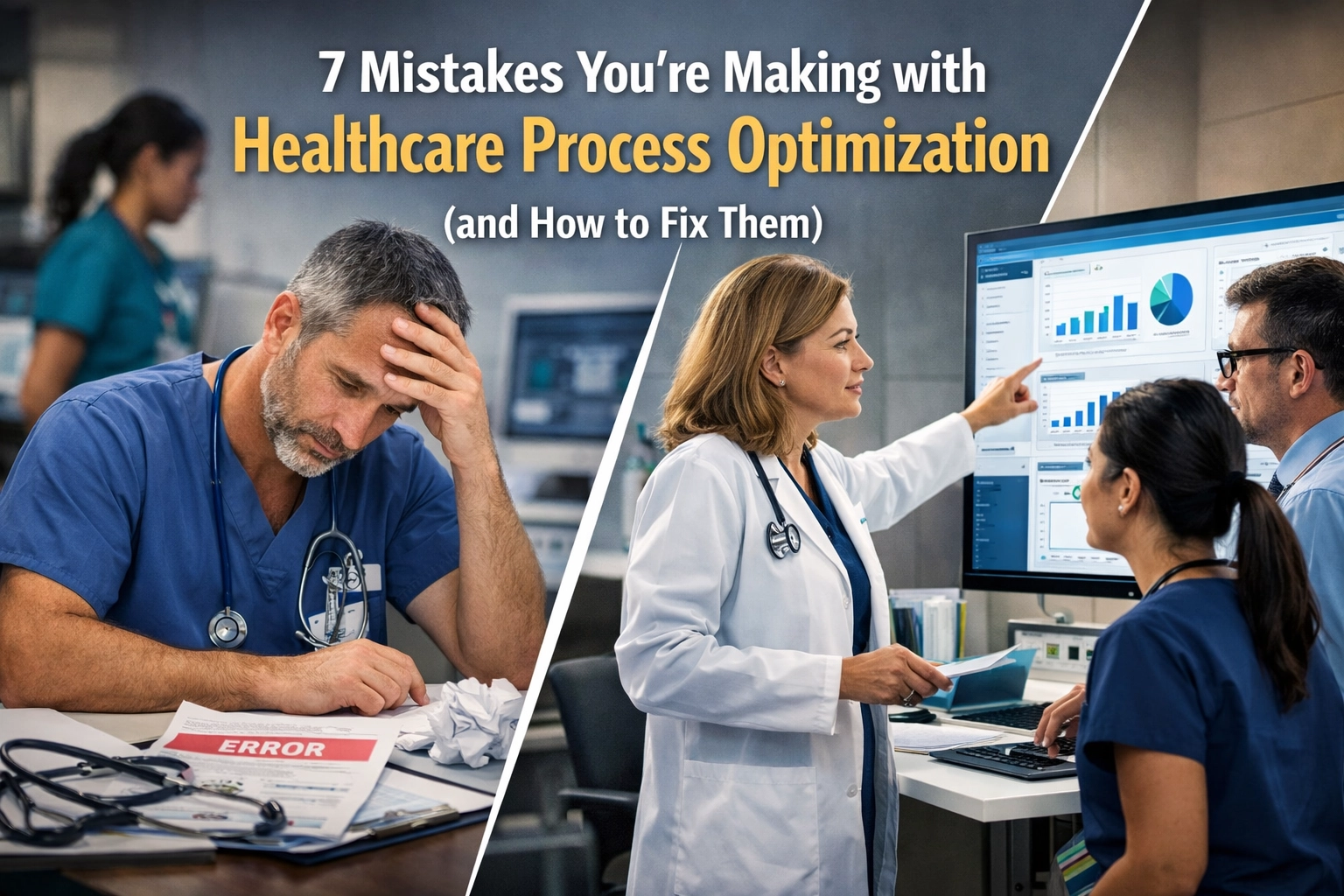
  • 7 Mistakes You’re Making with Healthcare Process Optimization (and How to Fix Them)

    7 Mistakes You’re Making with Healthcare Process Optimization (and How to Fix Them)

    In the high-stakes environment of modern healthcare, growth is often viewed as the ultimate metric of success. However, for many agency owners and providers, growth feels less like a victory and more like a high-speed collision. As patient volumes increase and regulatory demands intensify, the cracks in your operational foundation begin to widen. We often see agencies attempting to "scale" by simply adding more people to broken workflows, only to find themselves trapped in a cycle of burnout, compliance risks, and stagnating revenue.

    True operational excellence is not achieved by working harder; it is achieved by building systems that deliver predictable performance. Process optimization is the bridge between a chaotic practice and a scalable enterprise. Yet, even the most well-intentioned leaders fall into common traps that stall progress and drain resources.

    Below, we examine the seven most critical mistakes healthcare organizations make during process optimization and the strategic fixes required to secure sustainable success.

    1. Relying on Manual Data Entry as a "Standard"

    One of the most pervasive threats to healthcare efficiency is the persistence of manual data entry. Whether it is transcribing referral information or re-keying patient demographics into multiple portals, manual processes are a breeding ground for human error. In a regulated environment, a single typo can lead to a denied claim or, worse, a significant compliance violation.

    Fix: Implement end-to-end digital integration. Instead of relying on staff to be human bridges between software, invest in interoperable systems. By utilizing APIs and integrated Electronic Health Records (EHR), you ensure that data flows seamlessly from the point of intake to billing. This reduces the administrative burden on your team and drastically lowers the risk of data integrity issues.

    2. Building Processes Around Specific People Instead of Systems

    Many healthcare agencies fall into the "Hero Trap." They have one "superstar" employee who knows exactly how to navigate the billing maze or handle complex scheduling. While these individuals are valuable, building your business operations around their personal knowledge is a strategic liability. If that person leaves, your process disappears with them.

    Fix: Systematize institutional knowledge. At LAP Strategies and Consulting, LLC, we emphasize that a business must be built on systems, not personalities. Document every workflow into a standardized Operating Procedure (SOP). Your processes should be robust enough that a new hire can step into a role and achieve a predictable result based on the system provided, not their own intuition.

    Digital tablet displaying a healthcare process flowchart in a modern administrative office setting.

    3. Ignoring the Critical 'Intake-to-SOC' Flow

    The period between the initial referral (Intake) and the Start of Care (SOC) is where revenue is won or lost. Many agencies treat this as a series of disconnected tasks rather than a unified "Revenue Velocity" engine. Delays in this window don't just frustrate patients; they give competitors a chance to step in and cause your referral sources to lose confidence.

    Fix: Master the Intake-to-SOC framework. You must map this flow with surgical precision. Identify exactly where the bottlenecks occur: is it the physician signature, the internal clinical review, or the staffing coordinator? By optimizing this framework, you compress the time-to-care, which directly accelerates your cash flow and improves patient outcomes.

    4. Allowing Siloed Systems to Dictate the Workflow

    When your clinical team uses one platform, your billing team uses another, and your HR team is stuck with spreadsheets, you are operating in silos. These silos prevent a "single source of truth," leading to conflicting data and duplicated efforts. Optimization cannot happen in a vacuum; if one department optimizes a process that creates a bottleneck for another, the organization as a whole has not improved.

    Fix: Cross-departmental architectural alignment. Take a holistic view of your organization. When assessing new technology or workflows, involve stakeholders from every department. Ensure that your healthcare infrastructure supports a unified data flow where information captured at the start of the patient journey informs every subsequent step, including billing and compliance audits.

    5. Failing to Automate Insurance Eligibility Verification

    Nothing kills a profit margin faster than providing services for a patient whose insurance has expired or is out-of-network. Relying on staff to manually call payers or check portals daily is an inefficient use of professional talent and is highly prone to oversight.

    Fix: Deploy automated eligibility triggers. Modern healthcare technology allows for real-time eligibility verification. By automating this at the point of intake and again before the Start of Care, you eliminate the risk of "uncompensated care." This fix alone can significantly reduce revenue leakage and ensure your clinical team is focusing on patients who are cleared for service.

    Healthcare data dashboard on a laptop used for automated eligibility verification and revenue cycle management.

    6. Not Tracking Revenue Leakage Points

    Revenue leakage is the "silent killer" of healthcare agencies, especially those trying to break past the $2M revenue mark. It occurs through unbilled hours, missed documentation deadlines, and denied claims that are never followed up on. Most providers know they are losing money, but they cannot point to exactly where it is happening.

    Fix: Establish a KPI-driven feedback loop. You cannot manage what you do not measure. Identify the specific points in your process where revenue "leaks": such as late timesheet submissions or incomplete clinical notes. Use data dashboards to track these Key Performance Indicators (KPIs) in real-time. When a metric falls outside of the acceptable range, your system should trigger an immediate corrective action.

    7. Lack of Standardization Across Multiple Locations

    As agencies expand, they often allow different branches or teams to "do things their own way." This lack of standardization makes it impossible to scale quality control. It leads to inconsistent patient experiences and makes regulatory compliance a nightmare to manage during audits.

    Fix: Centralized command with decentralized execution. While local teams need the flexibility to serve their specific communities, the core processes: intake, billing, and compliance: must be standardized across the entire organization. This ensures that whether you are operating one location or ten, the strategic structure remains the same, providing a predictable foundation for further expansion.

    Modern multi-location medical facility showcasing scalable healthcare infrastructure and standardized systems.

    Frequently Asked Questions (FAQ)

    How do I know if my processes are the reason my growth has stalled?

    If you find that your leadership team is spending more time "putting out fires" than focusing on strategy, or if your payroll costs are rising faster than your patient census, your processes are likely the bottleneck. Stalled growth at the $2M-$5M mark is almost always a systems issue.

    Is process optimization expensive to implement?

    The cost of optimization is significantly lower than the cost of inefficiency. Revenue leakage, staff turnover due to burnout, and compliance fines are far more expensive than investing in integrated software or professional consulting services.

    How long does it take to see results from these fixes?

    While full organizational restructuring takes time, "quick wins": such as automating eligibility or cleaning up the Intake-to-SOC flow: can show measurable improvements in cash flow and staff productivity within 30 to 60 days.

    Can we optimize processes without replacing our current EHR?

    Yes. Often, the issue isn't the software itself but how it is being used. We focus on optimizing the workflows around your existing tools and identifying where simple integrations or better training can bridge the gaps.

    Concluding Insights

    Optimization is not a one-time event; it is a commitment to continuous improvement and structural integrity. By shifting your focus from "hiring more people" to "building better systems," you transition from a reactive business to a proactive, scalable healthcare organization. The consequences of ignoring these seven mistakes range from persistent revenue loss to terminal compliance failure. Conversely, the reward for fixing them is a resilient agency that delivers high-quality care with predictable financial results.

    Actionable Steps for Healthcare Leaders:

    1. Conduct a Process Audit: Identify the top three areas where manual data entry is still the norm.
    2. Map Your Intake-to-SOC Flow: Document every step from the first referral call to the first clinician visit.
    3. Identify Revenue Leakage: Review your last 90 days of denied claims to find recurring patterns.
    4. Standardize One Workflow: Pick your most chaotic process and create a definitive SOP for it this week.
    5. Schedule a Strategy Call: If you are ready to stop guessing and start scaling, book a strategy call to discuss a custom framework for your agency.

    The path to sustainable growth is paved with intentional systems. It is time to stop working in your business and start working on it.

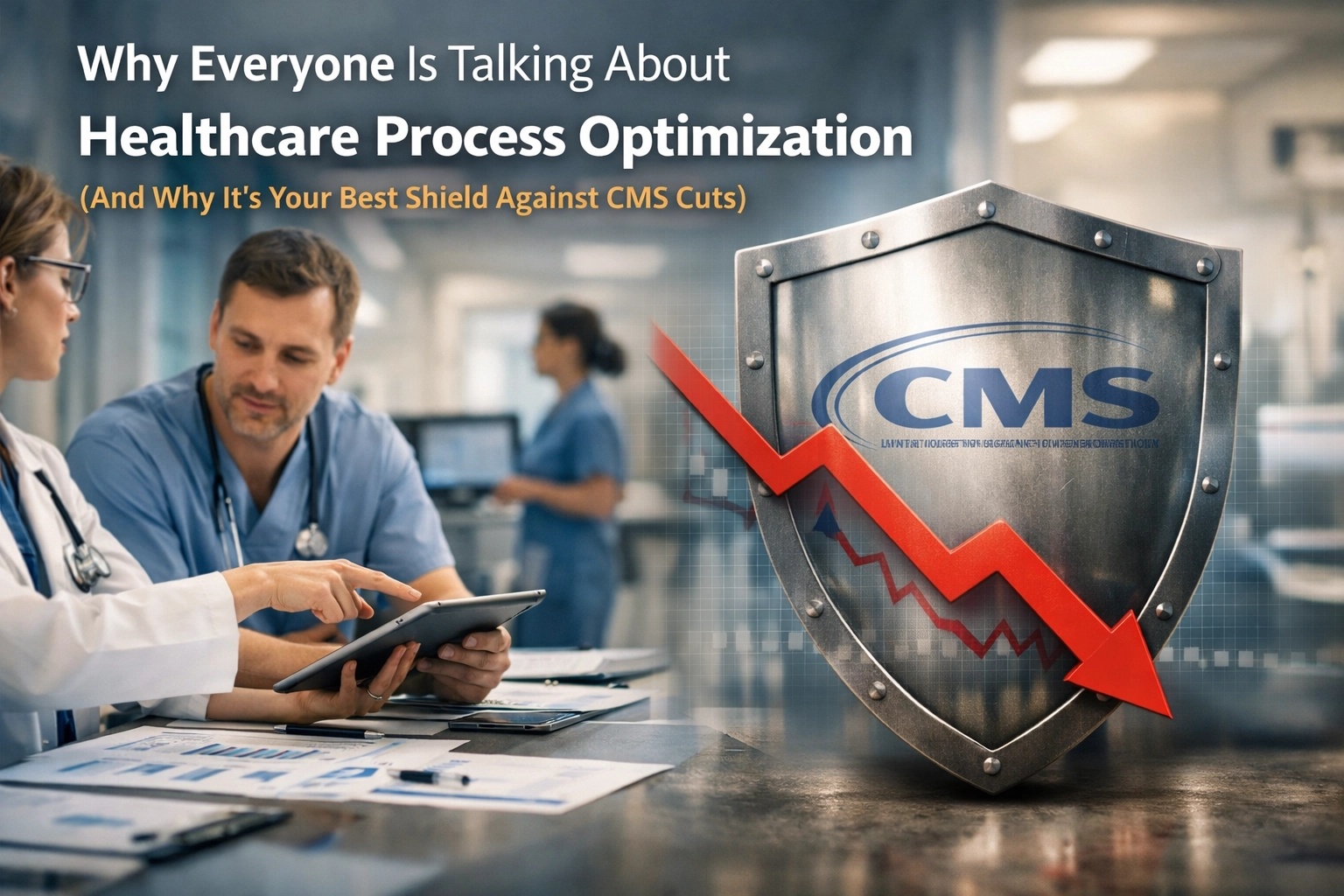
  • Why Everyone Is Talking About Healthcare Process Optimization (And Why It’s Your Best Shield Against CMS Cuts)

    Why Everyone Is Talking About Healthcare Process Optimization (And Why It’s Your Best Shield Against CMS Cuts)

    In the current healthcare landscape of 2026, the margin for operational error has effectively evaporated. Healthcare administrators and agency owners are no longer operating in an environment of "forgiving" reimbursements. Instead, we are navigating a perfect storm of expiring subsidies, increasing uncompensated care demands, and a more aggressive stance from the Centers for Medicare & Medicaid Services (CMS).

    As we look at the financial projections for this year, the data is sobering. The expiration of enhanced subsidies is projected to drive a nearly $8 billion increase in uncompensated care demand. For many agencies, this financial headwind is compounded by CMS payment adjustments and tightening audit protocols. In this high-stakes environment, healthcare process optimization is no longer a luxury for the forward-thinking: it is the primary shield protecting your organization’s solvency and long-term viability.

    The Invisible Threat: Why CMS Cuts and Margin Compression Demand Action Now

    The phrase "CMS cuts" often triggers a defensive reaction, yet few organizations have restructured their operations to withstand them. When reimbursement rates flatten or decrease, a business that relies on inefficient, manual processes will see its profit margins vanish first.

    Process optimization is the systematic effort to identify and eliminate non-value-adding steps within your clinical and administrative workflows. In 2026, this isn't just about saving time; it is about operational excellence as a survival strategy. Without a lean, highly efficient infrastructure, your agency is essentially subsidizing its own inefficiencies with dwindling revenue.

    Modern healthcare executive workspace highlighting strategic data analysis for operational excellence.

    The Direct Impact of Regulatory Scrutiny

    Regulatory compliance is often viewed through the lens of "checking boxes," but in a post-2025 regulatory climate, CMS is increasingly focusing on the integrity of the process itself. If your documentation is inconsistent or your intake-to-care timeline is sluggish, you are inviting audits that can lead to clawbacks.

    • Predictable outcomes: Standardized processes ensure that every patient interaction and every billable hour meets the highest level of regulatory scrutiny.
    • Risk mitigation: By optimizing how data is captured at the point of care, you reduce the likelihood of technical denials. For a deeper dive into current standards, see our guide on why your risk assessment matters in 2026.

    Process Optimization as a Defensive Shield

    To protect your agency against external financial shocks, you must look inward at your infrastructure development. A robust operational framework allows you to do more with less, effectively "widening" your margins even as CMS attempts to narrow them.

    Accelerating Revenue Velocity

    One of the most critical metrics for any healthcare firm is the speed at which a lead becomes a patient and a patient becomes a reimbursed claim. We refer to this as "Revenue Velocity." If your internal processes are bogged down by administrative friction, your cash flow suffers.

    • Reduced administrative hurdles: Streamlining benefit verification and prior authorization can prevent the "drop-off" that occurs when patients are forced to wait too long for therapy.
    • Optimized Intake-to-SOC: Improving the timeline from the initial referral to the start of care (SOC) is the single most effective way to increase revenue without increasing marketing spend. You can explore this further in our Intake to SOC framework.

    digital-efficiency-chatgpt-logo-blue-orange-gradient.webp

    The Role of AI and Automation in 2026 Efficiency

    We have entered an era where "Agentic AI" and advanced automation are no longer experimental; they are foundational components of optimizing healthcare operations for growth. Organizations that continue to rely on manual data entry or fragmented spreadsheet tracking are operating at a severe disadvantage.

    Implementing Agentic AI for Patient Access

    Modern healthcare consulting focuses heavily on digital transformation. By deploying AI to handle high-friction tasks: such as scheduling, patient outreach, and initial screening: you free up your clinical staff to focus on high-value patient care.

    • Workflow standardization: Automation forces a level of consistency that human processes lack. When a machine handles a workflow, the output is identical every time, which is a key requirement for scalable growth.
    • Error reduction: Manual rework is one of the largest "hidden costs" in healthcare. By automating the data flow between your CRM and EHR, you eliminate the transcription errors that lead to billing delays and compliance failures.

    Operational Restructuring: Breaking the $2M Ceiling

    Many healthcare agencies find themselves hitting a "revenue wall" around the $2 million mark. At this stage, the manual processes that worked for a small team begin to fracture under the weight of increased volume. To scale beyond this point, you must move away from "heroic effort" and toward "systemic efficiency."

    • Scalable growth: Growth is only sustainable if your systems can handle double the volume without doubling your headcount. This requires a complete assessment of your healthcare infrastructure development.
    • Resource allocation: Optimization allows you to shift resources from administrative "overhead" to clinical "revenue generators." This shift is essential for agencies that find their revenue stalling.

    efficiency-control-console.webp

    Clinical Decision Support and Stewardship

    Beyond the back office, process optimization touches the patient bedside. Investing in clinical decision support tools reduces inpatient spend and improves outcomes. In an environment where CMS increasingly ties reimbursement to quality metrics, the "quality of your process" directly dictates the "quantity of your check."

    Clinician using a digital tablet for clinical decision support and optimized patient care workflows.

    Frequently Asked Questions

    What is the first step in healthcare process optimization?

    The first step is a comprehensive operational audit. You must assess your current workflows to identify where bottlenecks exist. Most agencies find that their biggest "leaks" are in the handoff between departments.

    How long does it take to see a ROI from optimization?

    While full restructuring takes time, many agencies see "quick wins" in administrative efficiency within the first 30 to 60 days. This is typically achieved by automating repetitive tasks and standardizing the intake process.

    Is process optimization expensive?

    The cost of not optimizing is far higher. With CMS cuts looming and inflation impacting labor costs, the "status quo" is the most expensive path an agency can take. Most optimization strategies pay for themselves through recovered revenue and reduced rework.

    Can optimization help with staff burnout?

    Absolutely. Most burnout is caused by "clutter work": the frustrating, repetitive administrative tasks that prevent clinicians from doing the work they were trained for. By optimizing these processes, you improve staff retention and satisfaction.

    Concluding Insights

    The healthcare industry in 2026 demands a new level of professional rigor. As CMS continues to adjust reimbursement models and the cost of care rises, the agencies that thrive will be those that treat process with the same importance as patient care. Process optimization is not merely a technical upgrade; it is a strategic repositioning of your entire organization toward resilience and sustainable success.

    Actionable Steps for Implementation:

    1. Conduct a Process Mining Audit: Use data from your EHR and CRM to identify exactly where referrals are stalling or where documentation is being sent back for rework.
    2. Standardize Your Core Workflows: Create a single, "source of truth" manual for every administrative and clinical process. Eliminate "the way we've always done it" in favor of the most efficient path.
    3. Invest in Scalable Systems: Ensure your software stack is integrated. Fragmented systems are the leading cause of administrative friction. Explore our framework for sustainable growth to see how these systems fit together.
    4. Leverage Expert Consulting: Sometimes, you are too close to the problem to see the solution. Collaborating with a strategic advisor can provide the objective perspective needed to identify structural weaknesses.

    At LAP Strategies and Consulting, LLC, we specialize in guiding healthcare organizations through the complexities of operational restructuring and regulatory compliance. The landscape is shifting rapidly, but with the right systems in place, your agency can turn these challenges into a competitive advantage.

    Ready to secure your agency's future against the next wave of CMS changes? Book a Strategy Call today and let’s build a shield for your business.

  • The Proven Healthcare Process Optimization Framework: Ending the Rework Loop Between Clinicians and QA

    The Proven Healthcare Process Optimization Framework: Ending the Rework Loop Between Clinicians and QA

    In the rapidly evolving landscape of modern healthcare, the friction between clinical delivery and administrative oversight has become a primary bottleneck for growth. For many regulated agencies, the "rework loop": that frustrating cycle where documentation moves back and forth between clinicians and Quality Assurance (QA) teams: is more than a minor annoyance. It is a systemic drain on resources, a threat to regulatory compliance, and a significant contributor to clinician burnout.

    At LAP Strategies and Consulting, LLC, we recognize that operational excellence is not achieved by simply demanding more from your staff. Instead, it is the result of a deliberate, structured approach to healthcare process optimization. To move beyond the limitations of manual oversight and fragmented workflows, leadership must implement a framework that harmonizes clinical excellence with administrative rigor.

    The High Cost of the Rework Loop

    The rework loop occurs when clinical documentation fails to meet regulatory or internal standards on the first pass. While it may seem like a standard part of the QA process, the cumulative impact of these "minor" corrections is staggering.

    • Revenue Velocity Degradation: Every hour a chart spends in "correction mode" is an hour that billing is delayed. In a high-volume environment, this creates a significant lag in cash flow.
    • Increased Operational Overhead: Managing a constant stream of corrections requires additional administrative hours, effectively doubling the cost of processing a single patient encounter.
    • Regulatory Exposure: Frequent rework often indicates a lack of fundamental understanding of compliance requirements. During a short-notice audit, these systemic gaps become high-risk liabilities.
    • Clinician Dissatisfaction: Clinicians enter the field to provide care, not to play "documentation tag." A heavy rework burden leads to frustration and high turnover rates.

    The LAPSC Process Optimization Framework

    To solve this, we advocate for a transition from a "reactive correction" model to a "proactive compliance" model. This framework is designed to integrate quality directly into the clinical workflow, ensuring that documentation is accurate, compliant, and ready for billing upon the first submission.

    Phase 1: Diagnostic Mapping and Bottleneck Identification

    Before implementing changes, it is essential to assess the current state of your workflow. We often find that agencies possess "tribal knowledge" rather than documented processes. By mapping the lifecycle of a patient record: from intake to final claim submission: you can pinpoint exactly where the friction occurs.

    • Visualizing the Workflow: Utilize process mapping tools to identify "dead zones" where files sit idle or move backward in the chain.
    • Quantifying Error Rates: Categorize the most common QA "kickbacks." Are they clerical errors, clinical inconsistencies, or missing signatures? Data-driven insights allow for targeted interventions.

    efficiency-control-console.webp

    Phase 2: Standardizing the "Golden Thread"

    The "Golden Thread" refers to the seamless narrative of medical necessity that should run through every piece of documentation, from the initial referral to the discharge summary. When this thread is broken, QA must intervene.

    • Standardized Templates: Moving away from open-ended narrative fields toward structured, prompt-based documentation reduces the likelihood of omitting critical regulatory elements.
    • Unified Language: Establish a clear dictionary of terms and expectations that both clinicians and QA staff agree upon. This eliminates the "subjective" nature of many QA reviews.

    Phase 3: Integrating Proactive Quality Assurance

    The most effective way to end the rework loop is to ensure that quality happens at the point of care. This requires shifting the QA function "upstream."

    • Real-Time Validation: Implement systems that provide clinicians with immediate feedback. For example, optimizing healthcare operations often involves digital tools that prevent a user from submitting a form if a mandatory regulatory field is missing.
    • Peer-to-Peer Mentorship: Instead of QA acting as the "police," transition the role to that of a "coach." Regular, constructive feedback loops help clinicians understand the why behind documentation requirements.

    Healthcare quality specialist and clinician collaborating on digital documentation for process optimization.

    Leveraging Technology for Scalable Growth

    In 2026, manual tracking of clinical workflows is no longer a viable strategy for agencies aiming for sustainable success. Digital transformation is the catalyst that allows an agency to scale without a linear increase in administrative headcount.

    • Automated Workflows: Use intelligent routing to ensure that the moment a clinician signs a note, it is moved to the appropriate next step based on its complexity and risk profile.
    • Data Dashboards: Invest in real-time visibility. Leadership should be able to see, at a glance, the status of all pending documentation and identify which teams are meeting timeliness standards and which are struggling.
    • Infrastructure Development: A robust healthcare infrastructure ensures that your systems talk to each other, reducing the need for manual data entry and the errors that come with it.

    The Role of Compliance Consulting

    Many agencies attempt to optimize their processes internally but find themselves blinded by their own organizational habits. This is where a healthcare compliance consulting strategy becomes invaluable. An external expert brings a fresh perspective and can identify risks that internal teams may have grown accustomed to.

    At LAP Strategies and Consulting, LLC, we specialize in helping agencies move from $2M revenue plateaus to scalable growth by refining these very systems. Our Intake to SOC framework is a prime example of how tightening a specific segment of the workflow can have a massive impact on overall revenue velocity.

    virtual-collaboration-setup.webp

    Frequently Asked Questions

    Q: How long does it typically take to see results from process optimization?
    A: While a full cultural shift takes time, most agencies see a measurable decrease in "days to sign" and "QA rework rates" within the first 30 to 60 days of implementing a structured framework.

    Q: Our clinicians are already overwhelmed. Won't more "process" just make it worse?
    A: On the contrary, a well-optimized process removes the cognitive load. By providing clear templates and reducing the number of times a clinician has to revisit an old chart, you actually give them back time to focus on patient care.

    Q: Is this framework applicable to small agencies, or only large ones?
    A: Process optimization is even more critical for smaller agencies. Larger organizations can often hide inefficiencies behind a large workforce; smaller firms must be lean and highly efficient to remain competitive and profitable.

    Q: Does technology replace the need for a QA team?
    A: Technology does not replace QA; it empowers it. Automation handles the clerical "checks," allowing your QA professionals to focus their expertise on clinical high-risk areas that require human judgment.

    Healthcare executive boardroom featuring an analytics dashboard showing upward trends and scalable growth.

    Concluding Insights

    The rework loop between clinicians and QA is not a permanent fixture of healthcare operations: it is a symptom of a fractured workflow. By adopting a structured framework that prioritizes standardization, proactive quality checks, and technological integration, your agency can achieve a state of operational excellence that supports both clinical quality and financial health.

    As the regulatory environment becomes increasingly stringent, the ability to produce "clean" documentation on the first pass will be the defining characteristic of successful healthcare firms.

    Actionable Steps for Leadership:

    1. Identify the Friction: Spend one week tracking exactly how many times documentation is sent back for correction and why.
    2. Audit Your Infrastructure: Determine if your current software facilitates a smooth workflow or if it creates additional manual steps.
    3. Engage a Strategic Advisor: Schedule an operational assessment to identify hidden revenue leaks in your current process.
    4. Set Clear KPIs: Establish a goal for "First-Pass Acceptance Rate" and make it a key performance indicator for both clinical and QA leadership.
    5. Standardize Training: Ensure that onboarding for new clinicians includes a deep dive into documentation requirements, not just clinical protocols.

    If you are ready to stop the cycle of rework and position your agency for scalable growth, let’s discuss how LAP Strategies and Consulting, LLC can build the systems you need for a more resilient future.

  • Stop Wasting Time on Manual Audits: Try These 7 Healthcare Process Optimization Quick Hacks

    Stop Wasting Time on Manual Audits: Try These 7 Healthcare Process Optimization Quick Hacks

    In the rapidly evolving landscape of 2026, healthcare executives and agency owners find themselves at a critical crossroads. The administrative burden associated with manual auditing is no longer just a nuisance; it is a significant barrier to scalable growth. As regulatory requirements become more complex and the demand for high-quality care increases, relying on antiquated, paper-heavy, or manual spreadsheet-based audit processes is a recipe for operational stagnation.

    At LAP Strategies and Consulting, LLC, we recognize that true operational excellence stems from a commitment to digital transformation. Manual audits are inherently reactive, prone to human error, and incredibly time-consuming. To remain competitive and maintain strict regulatory compliance, agencies must transition toward automated, data-driven systems.

    The following seven healthcare process optimization hacks are designed to help your organization reclaim valuable hours, reduce revenue leakage, and build a more resilient infrastructure.

    1. Automate Routine Administrative Workflows

    The most immediate way to reduce the need for manual oversight is to eliminate the repetitive tasks that create data entry errors. By offloading tedious administrative work to technology, your team can focus on high-value clinical and strategic activities.

    • Workflow integration: Implement automated appointment reminders and test result delivery systems to minimize the "phone tag" that often complicates manual record-keeping.
    • Scripting and macros: Utilize macros and scripts within your existing software to handle data migration and verification, ensuring that information moves seamlessly from intake to the final patient record.
    • Digital efficiency: Leveraging AI-driven tools can streamline the initial review of documentation, flagging missing signatures or incomplete fields before a human even touches the file.

    Digital Efficiency and AI Integration

    2. Standardize Processes with Robust SOPs

    Variation is the enemy of efficiency. When every clinician or administrator follows a slightly different method for documentation, the audit process becomes a nightmare of detective work. Establishing and documenting consistent Standard Operating Procedures (SOPs) is a foundational step in healthcare process optimization.

    • Uniformity of practice: Ensure that every team member is trained on a single, unified workflow for patient intake, clinical notes, and discharge summaries.
    • Error reduction: By standardizing the "how," you eliminate the discrepancies that typically require manual auditing to identify and correct.
    • Institutional knowledge: Well-documented SOPs prevent operational knowledge from leaving the building when a key staff member departs, maintaining stability during periods of growth.

    3. Leverage Data Analytics for Proactive Monitoring

    Instead of waiting for a quarterly audit to find out your compliance rate has dipped, use data analytics to monitor performance in real-time. Moving from a reactive to a proactive posture allows you to catch inefficiencies before they become systemic failures.

    • Metric tracking: Collect data on key performance indicators (KPIs) such as documentation turnaround time and claim denial rates.
    • Automated flagging: Set up dashboard alerts that notify management when a specific metric falls outside of the established threshold, allowing for immediate corrective action.
    • Continuous improvement: Use historical data trends to predict where your next bottleneck might occur, enabling you to adjust your infrastructure development strategies accordingly.

    Digital tablet showing healthcare performance metrics and data analytics for process optimization.

    4. Deploy Machine Learning for Predictive Analysis

    As we progress through 2026, the use of machine learning (ML) has moved from a luxury to a necessity for large-scale healthcare organizations. Predictive models can scan thousands of records in seconds, identifying patterns that a human auditor might overlook.

    • Pattern recognition: ML algorithms can identify subtle trends in billing or clinical documentation that suggest potential non-compliance or upcoming audit risks.
    • Risk stratification: Automatically categorize files based on their risk level, allowing your human auditors to focus their limited time on the most "high-risk" cases rather than auditing a random (and potentially safe) sample.
    • Resource allocation: Predictive analytics help you understand which departments require more training or oversight, allowing for a more surgical approach to management.

    5. Optimize Your EMR for Auto-Coding and Templates

    Many healthcare agencies are only using a fraction of their Electronic Medical Record (EMR) system’s capabilities. Mastering the built-in features of your EMR can drastically reduce the time spent on manual documentation verification.

    • Dot phrases and templates: Standardize clinical input through the use of templates, ensuring that all required regulatory elements are captured during the point of care.
    • Auto-coding features: Leverage EMR-driven auto-coding to match clinical notes with the correct billing codes, reducing the manual "re-work" loop between clinicians and the billing department.
    • System integration: Ensure your EMR communicates effectively with your payroll and scheduling systems to prevent data silos that necessitate manual reconciliation.

    Streamlined Control and Communication Infrastructure

    6. Automate Process Documentation Generation

    One of the most time-consuming aspects of an audit is proving that a process was followed. Instead of manually writing reports to justify your actions, utilize process automation tools that generate documentation as the work is performed.

    • Audit trails: Digital systems provide a timestamped, unalterable record of every action taken within a patient file, serving as a built-in audit trail for surveyors.
    • Step-by-step guides: Use tools that capture workflows in real-time to create living documentation that stays updated as your processes evolve.
    • Transparency: Automated documentation provides a level of transparency that manual logs simply cannot match, building trust with both internal stakeholders and external regulatory bodies.

    7. Establish Real-Time Feedback Loops

    Process optimization is not a "one-and-done" project. To truly eliminate the burden of manual audits, you must create feedback loops that allow for continuous refinement of your operations.

    • Digital questionnaires: Embed quick feedback prompts for staff within the software they use daily to identify "pain points" in the workflow immediately.
    • Rapid refinement: When a data system flags an error, the resolution should be documented and used to update the training protocol within days, not months.
    • Sustainable success: Continuous monitoring ensures that your agency remains resilient in the face of changing industry trends and regulatory updates.

    Modern Setup for Remote Strategy and Collaboration

    Frequently Asked Questions (FAQ)

    How much does it cost to implement these automation hacks?

    While there is an initial investment in software and training, the return on investment (ROI) is typically realized within the first six months through reduced labor costs, fewer billing errors, and the prevention of costly compliance fines. We recommend starting with system assessments to prioritize the most impactful changes.

    Will automation replace our compliance staff?

    No. Automation is intended to augment your staff, not replace them. It removes the "grunt work" of data entry and basic checking, allowing your compliance experts to focus on complex decision-making and strategic risk management.

    Is our current EMR capable of these optimizations?

    Most modern EMRs have these features, but they are often not fully configured. Optimization usually requires a deep dive into the system settings and customized training for your clinical team.

    How do we start if our staff is resistant to new technology?

    Change management is a critical component of our framework. We recommend a phased approach: start with one "quick win" (like automated reminders) to demonstrate value before moving to more complex ML integrations.

    Concluding Insights

    The transition from manual audits to automated process optimization is no longer optional for healthcare agencies looking to achieve sustainable growth in 2026. By embracing technology and standardizing operations, you protect your revenue, empower your staff, and: most importantly: ensure the highest level of care for your patients.

    Actionable Steps to Take Today:

    1. Assess your current workload: Identify the top three manual tasks that consume the most administrative time each week.
    2. Audit your EMR usage: Meet with your software vendor to determine which auto-coding and template features are currently inactive.
    3. Standardize one workflow: Choose a high-frequency process, such as "Intake to Start of Care," and create a definitive, digital SOP for it.
    4. Identify data gaps: Determine what information you are currently collecting manually that could be captured automatically through your digital systems.
    5. Collaborate with experts: If your internal team is overwhelmed, consider booking a strategy call to map out a professional optimization roadmap.

    By moving toward a "compliance by design" model, you shift your focus from surviving audits to thriving in a competitive market. Let LAP Strategies and Consulting, LLC help you build the infrastructure necessary for the next chapter of your agency's success.

  • The Ultimate Guide to Healthcare Administrative Efficiency: Everything You Need to Succeed

    The Ultimate Guide to Healthcare Administrative Efficiency: Everything You Need to Succeed

    In the rapidly evolving landscape of 2026, healthcare organizations are facing a dual pressure: the demand for superior patient outcomes and the necessity of maintaining rigorous fiscal health. As we navigate this dynamic environment, it has become increasingly clear that clinical excellence cannot exist in a vacuum. It must be supported by a robust framework of administrative efficiency. For many agencies, the difference between stagnant growth and scalable growth lies in how effectively they manage the "invisible" operations that power the front lines.

    At LAP Strategies and Consulting, LLC, we recognize that administrative efficiency is the cornerstone of operational excellence. It is the mechanism that transforms a chaotic workflow into a predictable, revenue-generating engine. This guide explores the strategic pillars required to optimize your administrative infrastructure, ensuring your organization remains resilient, compliant, and profitable.

    The Foundation: Technology and Digital Transformation

    Digital transformation is no longer a forward-looking concept; it is the current standard for any healthcare firm seeking to remain competitive. Implementing core digital systems is the first step toward reclaiming lost time and reducing the overhead that often plagues manual operations.

    efficiency-control-console.webp

    Implementing Core Digital Systems

    The integration of Electronic Health Records (EHRs), automated billing platforms, and sophisticated telehealth portals is foundational. These systems serve as the "central nervous system" of your organization, ensuring that data is accessible, accurate, and actionable.

    • Enhanced data accessibility: Transitioning to centralized digital records ensures that administrative staff and clinicians are working from a single source of truth, eliminating the time wasted searching for paper files.
    • Reduction in manual workload: Automated billing systems drastically reduce the human hours required for claim submission and follow-up, allowing your team to focus on high-value tasks.
    • Scalability: Digital infrastructures are inherently more flexible, allowing you to increase patient volume without a linear increase in administrative headcount.

    The Power of Automation

    Recent industry data suggests that practices adopting automation and digital tools report a 20-30% reduction in administrative costs. By identifying repetitive, high-volume tasks, you can deploy targeted solutions that eliminate bottlenecks.

    digital-efficiency-chatgpt-logo-blue-orange-gradient.webp

    Key areas ripe for automation include:

    • Claims processing: Real-time eligibility checks and automated claim scrubbing.
    • Prior authorizations: Utilizing AI-driven workflows to submit and track requests without manual intervention.
    • Appointment scheduling: Implementing self-service portals and automated reminders to reduce no-show rates.
    • Document transcription: Using voice-to-text and AI summarization tools to integrate notes directly into the EHR.

    The Process Optimization Framework: Applying the PDCA Cycle

    Efficiency is not a one-time event; it is a continuous cycle of improvement. To achieve true healthcare process optimization, we recommend the Plan-Do-Check-Act (PDCA) cycle. This systematic approach allows leadership to identify inefficiencies with surgical precision.

    Driving Dramatic Results

    Real-world applications of the PDCA cycle have shown staggering results. In some clinical settings, the median processing time for hospitalization and discharge procedures has dropped from over four days to less than one hour through systematic refinement.

    To implement this framework, follow these strategic steps:

    1. Plan: Collect monthly data on processing times across every department. Identify where the lag occurs: is it in the intake-to-SOC framework or in the final billing cycle?
    2. Do: Implement targeted interventions, such as staff retraining or new software links between departments.
    3. Check: Analyze the post-intervention data. Did the processing time drop as expected?
    4. Act: If the intervention worked, standardize the new process across the organization. If not, return to the planning phase with new insights.

    Healthcare workspace with data analytics dashboard and stethoscope for administrative strategy and efficiency.

    Workflow Mapping and Streamlining

    Before you can improve a process, you must see it clearly. Workflow mapping involves documenting every step a patient or a document takes through your organization. This exercise often reveals redundant steps that add no value to the patient experience or the bottom line.

    • Elimination of "rework loops" : Identify where clinicians and QA teams are trading documents back and forth due to errors.
    • Resource utilization: Ensure that your highest-paid staff members are not performing tasks that could be handled by a lower-cost administrative assistant or an automated tool.
    • Bottleneck identification: Pinpoint the exact "choke points" where operations stall, such as waiting for a physician's signature or a compliance review.

    Integrating Telehealth for Operational Gains

    Telehealth is often viewed through the lens of patient convenience, but its impact on administrative efficiency is equally profound. By digitizing the patient encounter from start to finish, you remove the physical friction associated with traditional office visits.

    virtual-collaboration-setup.webp

    • Simplified record keeping: Telehealth platforms often integrate directly with EHRs, allowing session notes and metadata to be captured in real-time.
    • Reduced physical overhead: Managing a virtual patient load reduces the administrative burden of physical facility management, including check-in desks and waiting room coordination.
    • Streamlined communication: Secure messaging within telehealth apps replaces fragmented phone tags and unsecure emails, centralizing provider-patient interactions.

    Staff Engagement and Leadership Visibility

    A strategy for efficiency is only as strong as the team executing it. In our consulting work at LAP Strategies, we often find that the biggest barrier to efficiency is not technology, but a lack of awareness or engagement from the staff.

    Strengthening Management Support

    Efficiency must be a priority at the highest levels of leadership. When management regularly reviews processing metrics and shares them during leadership meetings, it signals to the entire organization that operational excellence is a core value.

    • Publicizing metrics: Regularly displaying the rankings of processing times for various departments fosters a culture of healthy competition and accountability.
    • Targeted training: Efficiency requires a specific skill set. Conduct monthly training sessions that focus on the "why" behind the process, not just the "how."

    close-up-black-shure-podcast-microphone.webp

    Strategic Compliance and Contract Management

    Efficiency and compliance are two sides of the same coin. An efficient process that violates regulatory standards is a liability, while a compliant process that is inefficient is a drain on resources.

    • Audit readiness: By maintaining efficient documentation workflows, your organization is always "audit-ready," preventing the last-minute scramble that disrupts normal operations.
    • Contract renegotiation: Reviewing managed care contracts to ensure favorable terms is a vital administrative task. Outdated agreements can hinder your growth even if your internal processes are perfect.

    Frequently Asked Questions (FAQ)

    What is the first step in improving administrative efficiency?

    The first step is a comprehensive practice assessment. You cannot improve what you do not measure. Establish baseline metrics for your most critical workflows, such as patient intake, billing cycles, and compliance reporting.

    How does automation affect my current staff?

    Automation is designed to augment your staff, not replace them. By removing repetitive, "robotic" tasks from their daily to-do lists, you allow your team to focus on complex problem-solving and patient-centric care, which ultimately improves job satisfaction and retention.

    Can a small agency afford these digital transformations?

    Small agencies often cannot afford not to transform. The cost of manual errors and slow processing times far outweighs the investment in scalable, cloud-based solutions. Many modern platforms offer tiered pricing that grows with your revenue.

    How do I maintain compliance while speeding up my processes?

    Compliance should be baked into the process, not added as an afterthought. By utilizing digital tools with built-in compliance checks and standardized templates, you can actually increase your compliance accuracy while reducing the time it takes to complete tasks.

    Concluding Insights: Your Roadmap to Excellence

    Achieving administrative efficiency in the healthcare sector is a deliberate journey that requires a blend of technology, strategy, and leadership. As we have seen, the rewards: ranging from 30% cost reductions to drastically shortened processing times: are well worth the effort. By focusing on infrastructure development and operational excellence, you position your firm to thrive regardless of market shifts.

    Actionable Steps to Take Today:

    1. Conduct a Workflow Audit: Map out your "Intake to SOC" process and identify three areas where delays occur most frequently.
    2. Evaluate Your Tech Stack: Assess whether your current EHR and billing systems are fully integrated or if they are creating manual work through data silos.
    3. Establish KPIs: Define "Key Performance Indicators" for administrative speed and accuracy, and begin reporting on them in your weekly leadership meetings.
    4. Engage an Expert: If your growth has stalled, consider a strategy call to identify the specific structural bottlenecks preventing you from reaching the next revenue tier.

    At LAP Strategies and Consulting, LLC, we are committed to helping you build a resilient, efficient, and highly profitable healthcare organization. Let us help you turn your administrative burden into your greatest competitive advantage. For more insights on optimizing your operations, explore our full blog archive.