Author: Lillian Paley

  • The Simple Trick to Improve Your Healthcare Operational Efficiency Right Now

    The Simple Trick to Improve Your Healthcare Operational Efficiency Right Now

    In the rapidly evolving landscape of 2026, healthcare organizations are facing a dual pressure: the demand for higher quality patient outcomes and the relentless need for cost containment. For many leaders at the helm of healthcare firms, the pursuit of healthcare operational efficiency often feels like a marathon with no finish line. We see organizations investing millions in cutting-edge medical technology while their administrative backbones remain brittle, held together by legacy manual processes and fragmented communication.

    The reality of modern healthcare is that clinical excellence alone no longer guarantees institutional survival. To thrive in this dynamic environment, providers must shift their focus toward healthcare process optimization. At LAP Strategies and Consulting, LLC, we have observed that the difference between a stalling practice and a high-growth organization often boils down to a single, fundamental shift in strategy. The "simple trick" isn't a hidden software or a secret management theory; it is the aggressive pursuit of systematized predictability.

    The Friction Point: Why Efficiency Remains Elusive

    Before we can implement the solution, we must identify the root cause of the friction. In many healthcare settings, operational "noise" is accepted as a cost of doing business. Staff members spend hours chasing down paperwork, verifying insurance, and reconciling schedules: tasks that provide zero clinical value but consume significant human capital.

    When these processes are not standardized, performance becomes unpredictable. Unpredictability is the enemy of scalable growth. If your intake process takes four hours one day and forty-eight hours the next, you cannot accurately forecast revenue or manage patient load. This variability is where revenue leakage occurs, and it is the primary reason why many firms struggle to cross key financial milestones.

    Visualizing the transition from chaotic healthcare workflows to streamlined operational efficiency.

    The Simple Trick: Standardizing Routine Decisions

    The most effective way to improve healthcare operational efficiency right now is to remove the "decision-making" burden from routine administrative tasks. By creating systems that deliver predictable performance, you allow your highly skilled workforce to focus on high-value clinical care rather than low-value logistics.

    This is achieved through the integration of standardized workflows and intelligent automation. When a process is standardized, there is only one "right way" to do it. This eliminates the trial-and-error approach that often plagues unoptimized departments.

    Leveraging Automation for Immediate Wins

    The most immediately actionable strategy in 2026 is the automation of routine administrative functions. Technology has matured to the point where "digital workers" can handle the heavy lifting of data entry and scheduling with higher accuracy than human counterparts.

    • Automated Patient Onboarding: By digitizing the intake process, you eliminate the manual transcription of patient data, reducing errors and accelerating the time-to-care.
    • EHR Optimization: Modern Electronic Health Records (EHRs) should be more than just digital filing cabinets. When optimized, they serve as the central nervous system of your facility, providing real-time data insights that inform clinical and operational decisions.
    • Predictive Scheduling: Using historical data to anticipate patient volume allows for smarter staffing models, ensuring you are neither overstaffed (wasting resources) nor understaffed (compromising care).

    Building Systems for Predictable Performance

    At LAP Strategies and Consulting, LLC, our framework is built on the belief that systems run the business, and people run the systems. To achieve true healthcare process optimization, you must look beyond individual tasks and examine the entire patient journey.

    One of the most critical areas for many of the firms we serve is the transition from initial contact to the start of care. We have developed a specific Intake to SOC framework that focuses on increasing revenue velocity by removing bottlenecks in these early, high-friction stages.

    Modern medical facility showing a streamlined intake-to-SOC framework for improved patient flow.

    Clinical Workflow Standardization

    Efficiency is not limited to the front office. Clinical workflows: the steps a provider takes from the moment they enter a patient room to the moment they sign off on a chart: are ripe for optimization.

    • Standardized Care Protocols: Implementing evidence-based clinical pathways ensures that every patient receives a consistent level of care, reducing the likelihood of costly readmissions or complications.
    • Telehealth Integration: Telehealth is no longer an "extra" service; it is a core component of operational excellence. It reduces facility overhead and travel time while expanding your geographical reach.
    • Daily Huddles: Short, structured team meetings at the start of each shift can dramatically improve coordination, ensuring that everyone is aligned on the day's goals and potential roadblocks.

    The Role of Infrastructure in Sustainable Growth

    You cannot build a high-performance organization on a crumbling foundation. Many healthcare firms stall because their internal infrastructure: their legal, financial, and operational systems: cannot handle the weight of their clinical success. This is a common phenomenon we explore in our analysis of why most healthcare agencies stall at $2M in revenue.

    To avoid these pitfalls, leaders must invest in infrastructure development that anticipates future needs. This includes:

    • Regulatory Compliance Frameworks: Proactive compliance systems prevent the catastrophic "stop-work" orders or fines that can derail a growing company.
    • Data Analytics Dashboards: You cannot manage what you do not measure. Real-time visibility into Key Performance Indicators (KPIs) allows for agile course correction.
    • Scalable Human Resource Systems: As you grow, your ability to recruit, train, and retain top talent becomes your primary competitive advantage.

    Strong healthcare infrastructure foundation supporting scalable growth and operational excellence.

    Implementing the Change: A Consultative Approach

    Improving efficiency is not a one-time project; it is a cultural shift. It requires a commitment to continuous improvement and a willingness to challenge the "way we've always done it." As strategic advisors, we recommend a phased approach to implementation to ensure staff buy-in and minimize disruption.

    1. Assess: Identify the three largest bottlenecks in your current operations.
    2. Standardize: Document the ideal process for each of these areas.
    3. Automate: Apply technology to handle the repetitive elements of these processes.
    4. Measure: Use data to verify that the change has resulted in measurable efficiency gains.
    5. Refine: Continuously iterate based on feedback and performance data.

    Healthcare data dashboard displaying growth metrics and process optimization performance.

    Frequently Asked Questions (FAQ)

    What is the first step in healthcare process optimization?

    The first step is always a thorough audit of your current state. You must identify where time and resources are being wasted before you can apply a solution. Look for tasks that are repetitive, manual, and prone to human error.

    Will automation replace my healthcare staff?

    No. In fact, automation is designed to support your staff. By removing the burden of "busy work," you allow your clinicians and administrative professionals to work at the top of their licenses, focusing on patient interactions and complex problem-solving that machines cannot replicate.

    How long does it take to see results from these changes?

    While some "quick wins" like daily huddles or simple administrative automation can show results in weeks, a full systemic optimization usually takes several months to fully realize its potential. The goal is sustainable, long-term growth, not a temporary fix.

    Why do most compliance audits fail?

    Most audits fail because the organization views compliance as a periodic event rather than a continuous system. By integrating compliance into your daily operational workflows, you ensure that you are always "audit-ready."

    Concluding Insights

    The path to healthcare operational efficiency is paved with standardized systems and a commitment to predictable performance. In 2026, the "simple trick" of moving from reactive management to proactive systemic design is what separates industry leaders from the rest of the pack. By focusing on healthcare process optimization, you are not just saving time; you are building a resilient organization capable of delivering exceptional care at scale.

    Actionable Steps for Your Organization:

    • Audit your intake process: Identify every touchpoint a patient has before care begins and look for opportunities to digitize or eliminate steps.
    • Identify manual data entry points: Pinpoint where staff are copying data from one system to another and seek integration or automation solutions.
    • Schedule a strategy review: Evaluate your current growth trajectory against your operational capacity. If your systems are straining, it is time to intervene.
    • Empower your team: Involve frontline staff in the optimization process; they are often the ones who best understand where the friction exists.

    If you are ready to transform your operations and achieve predictable performance, we invite you to book a strategy call with LAP Strategies and Consulting, LLC today. Together, we can build the systems that will drive your organization toward sustainable success.
  • Why Most Healthcare Agencies Fail at Operations (And How to Be the Exception)

    Why Most Healthcare Agencies Fail at Operations (And How to Be the Exception)

    The healthcare landscape in 2026 is defined by a singular, persistent paradox: while the demand for services and staffing is at an all-time high, the failure rate for healthcare agencies remains alarmingly elevated. On the surface, it seems counterintuitive. How can organizations with a steady stream of clients and a desperate market for their services find themselves facing insolvency or operational stagnation?

    The answer rarely lies in a lack of clinical expertise or market opportunity. Instead, the downfall of most healthcare organizations is rooted in the "invisible" layers of the business: the operational infrastructure. In a rapidly evolving and dynamic industry, relying on manual processes and reactive management is a recipe for disaster. To achieve healthcare operational efficiency, agencies must move beyond simply "working harder" and begin building systems that deliver predictable, scalable performance.

    The Growth Trap: Why Revenue Isn't Always a Safety Net

    One of the most dangerous misconceptions in healthcare management is the belief that rising revenue solves all problems. In reality, rapid expansion often acts as an accelerant for existing operational weaknesses. As an agency scales its recruitment and client acquisition, the cracks in its foundation: manual payroll workflows, spreadsheet-based credential tracking, and inconsistent billing: begin to widen.

    When these systems fail under the weight of growth, the consequences are immediate and severe. Margin compression occurs when agencies raise clinician pay to meet demand without simultaneously securing higher bill rates from facilities. This erosion of profit margins leaves the organization with no buffer to absorb payment delays or regulatory compliance costs. At LAP Strategies and Consulting, LLC, we frequently observe that many agencies fail while their top-line revenue is still growing, simply because they lacked the 5 essential systems required to manage that growth sustainably.

    Efficiency and Control

    The Three Pillars of Operational Failure

    To become the exception to the rule, leaders must first identify the specific bottlenecks that lead to systemic failure. Through our healthcare consulting services, we have identified three primary pillars where most agencies lose their footing:

    1. Margin Erosion and Financial Mismanagement

    Agencies often succumb to "pay pressure," increasing compensation for staff to win contracts without a rigorous analysis of their gross margins.

    • Inconsistent billing cycles: Delays in invoicing lead to extended Days Sales Outstanding (DSO), which starves the company of necessary cash flow.
    • Hidden operating expenses: Failing to account for the rising costs of compliance and insurance can turn a seemingly profitable contract into a financial drain.

    2. The "Spreadsheet Ceiling" in Operations

    Many agencies rely on manual data entry and disjointed software solutions. While these might suffice for a small team, they become a bottleneck as the organization grows.

    • Credentialing bottlenecks: If your compliance team is manually tracking certifications via email and Excel, you are one missed expiration away from a legal and financial nightmare.
    • Payroll errors: Inaccurate paychecks erode trust with clinicians, leading to high turnover and increased recruitment costs.

    3. Quality and Reputation Decay

    Operational failure doesn't just impact the bottom line; it impacts patient care. Studies indicate that agencies with poor operational oversight often see lower clinical performance scores and higher adverse event rates. When systems fail, the quality of staff placement drops, damaging the agency’s reputation with hospital partners and making future contract renewals nearly impossible.

    Building Predictable Performance: The LAP SC Framework

    Becoming the exception requires a shift from a reactive mindset to a proactive, systems-oriented approach. This is where our framework provides a significant competitive advantage. By eliminating bottlenecks and building predictable performance loops, we help healthcare entrepreneurs move from survival mode to sustainable scaling.

    Professional using a tablet to improve healthcare operational efficiency within a modern, organized administrative suite.

    Leveraging Digital Transformation and AI

    The integration of advanced technology is no longer optional. Modern healthcare consulting services emphasize the role of digital transformation in streamlining administrative burdens.

    • Automated Compliance Tracking: Utilizing AI-driven platforms to monitor credentials in real-time ensures 100% audit readiness at all times.
    • AI-Enhanced Revenue Cycle Management: Implementing "AI vs. AI" billing strategies can drastically reduce revenue leakage by catching errors before they result in a denied claim.

    Digital Efficiency and AI Integration

    Optimizing the Intake to SOC Velocity

    Revenue velocity is determined by how quickly an agency can move from initial intake to Start of Care (SOC). If your internal processes are bogged down by administrative red tape, your revenue will always be capped. We focus on optimizing this specific framework to ensure that clinicians are in the field and generating revenue as efficiently as possible.

    Transforming Your Agency into a Scalable Asset

    Success in the healthcare sector is not about who can work the most hours; it is about who has the most resilient systems. Agencies that invest in professional organizational restructuring are better positioned to handle market volatility and regulatory shifts.

    By prioritizing healthcare operational efficiency, you transform your business from a job that requires your constant intervention into a scalable asset that delivers predictable results. This transition is essential for those looking to reach the next revenue milestone, whether that is moving past the $2M revenue stall or preparing for an acquisition.

    Virtual Collaboration and Strategy

    Frequently Asked Questions (FAQ)

    What is the most common operational bottleneck in healthcare agencies?
    The most frequent bottleneck is the transition from recruitment to placement. Often, the "Intake to Start of Care" process is manual, causing delays that frustrate clinicians and leave hospital shifts unfilled.

    How can I protect my margins during rapid growth?
    Protecting margins requires a strict "bill-to-pay" ratio policy. You must ensure that every increase in clinician compensation is matched by a negotiated increase in bill rates, while simultaneously using automation to lower your internal cost-to-serve.

    When should a healthcare agency consider professional consulting?
    Most agencies reach a plateau when their current manual processes can no longer handle the volume of data and staffing needs. If you find your leadership team spending more time "putting out fires" than focusing on strategy, it is time to seek healthcare consulting services.

    How does operational efficiency impact regulatory compliance?
    Efficiency and compliance are two sides of the same coin. A streamlined, automated system tracks certifications and regulatory requirements automatically, reducing the risk of human error that leads to fines or loss of accreditation.

    Concluding Insights

    The path to becoming a top-tier healthcare agency is paved with strategic operational choices. While the market provides the opportunity, your internal systems provide the stability. To avoid the pitfalls that claim so many agencies, focus on the following actionable steps:

    1. Assess Your Current Infrastructure: Identify where manual data entry is causing delays or errors.
    2. Invest in Scalable Technology: Move away from fragmented spreadsheets and toward integrated operational platforms that offer real-time data visibility.
    3. Prioritize Revenue Velocity: Analyze your "Intake to SOC" timeline and eliminate any steps that do not add direct value to the patient or the clinician.
    4. Align Billing and Compensation: Conduct a thorough audit of your margins to ensure that growth is actually profitable.
    5. Seek Expert Guidance: Don’t wait for a crisis to fix your foundation. Collaborate with experts who understand the nuances of healthcare organizational restructuring.

    Building a resilient healthcare organization is a marathon, not a sprint. By focusing on operational excellence today, you ensure your agency’s relevance and profitability for years to come. If you're ready to build a more predictable future for your business, we invite you to book a strategy call with us to explore how we can optimize your operations for sustainable success.

  • The Operational Mistake That Cost a Healthcare Company Millions

    The Operational Mistake That Cost a Healthcare Company Millions

    In the high-stakes world of healthcare, growth is often viewed as the ultimate metric of success. However, for one mid-sized healthcare organization: let’s call them "Apex Care Providers": growth became a Trojan horse. On the surface, Apex was thriving. Their patient census was climbing, they were expanding into new territories, and their top-line revenue looked healthier than ever.

    Behind the scenes, however, a silent predator was at work. While the leadership focused on acquisition and expansion, their internal systems were fracturing under the weight of the new volume. It wasn’t a single catastrophic event that brought them to their knees; it was a series of systemic failures in healthcare infrastructure development that ultimately led to a multi-million dollar revenue collapse.

    At LAP Strategies and Consulting, LLC, we often see that the most dangerous threats to a healthcare business are not external market shifts, but internal operational "leaks" that go unnoticed until they become a flood. This is the story of how Apex Care Providers lost millions: and the lessons every healthcare leader must learn to ensure their own reducing revenue leakage healthcare strategies are airtight.

    The Illusion of Scalable Growth

    Apex Care Providers reached a point that many agencies dream of: the $15 million revenue mark. They had transitioned from a small local provider to a regional powerhouse. To keep up with the demand, they hired rapidly and opened three new satellite offices in less than eighteen months.

    The mistake began with a reliance on legacy systems. As they scaled, they continued to use the same manual spreadsheets and siloed software that worked when they were a $2 million company. They assumed that adding more people to the existing process would suffice. This is a common pitfall we discuss in our analysis of why most healthcare agencies stall at $2M revenue.

    Fragmented financial data: Because each satellite office maintained its own billing records in disconnected formats, the central office had zero real-time visibility into the accounts receivable (AR) aging reports.
    Manual intake processes: Referrals were being processed through a "best-effort" manual system, leading to significant delays and data entry errors that would later haunt their billing department.

    Efficiency and Streamlined Processes

    The $2.5 Million "Last-Mile" Failure

    The first major crack appeared during an internal audit. Apex discovered that over 15% of their claims from the previous fiscal year had been denied or remained unbilled due to missing "last-mile" documentation. In healthcare, "last-mile" refers to the final steps of service delivery: the clinical notes, the signed physician orders, and the verified Start of Care (SOC) data.

    Because their healthcare infrastructure development had not kept pace with their growth, the time between patient intake and the billing submission grew from five days to nearly twenty-five days. In our work, we call this the Intake to SOC Framework, and for Apex, the velocity had slowed to a crawl.

    The financial impact was devastating:

    • Uncollectible Revenue: Over $1.2 million in services were rendered but could not be billed because the "timely filing" window had closed.
    • Operational Overdrive: The administrative cost to "chase" missing signatures and correct errors cost the company an additional $400,000 in overtime and temporary staffing.
    • Regulatory Exposure: A subsequent state audit found that their lack of standardized documentation created compliance risks, resulting in nearly $900,000 in fines and clawbacks.

    Total loss? Over $2.5 million in a single calendar year.

    Identifying the Source of Revenue Leakage

    When LAP Strategies and Consulting, LLC was brought in to perform a diagnostic, we found that Apex wasn’t suffering from a lack of talent or clinical skill. They were suffering from "Operational Decay." Their processes were reactive rather than proactive.

    To help them begin reducing revenue leakage healthcare costs, we focused on three critical pillars of optimizing healthcare operations for growth:

    1. Centralizing Data Architecture

    A fragmented financial system is a playground for error. We assisted Apex in migrating from manual spreadsheets to an integrated, cloud-based platform that provided a "single source of truth." This allowed leadership to see exactly where a file was stuck in the pipeline: from intake to final payment.

    Healthcare executive analyzing digital financial dashboards to improve operational infrastructure and reduce revenue leakage.
    Visual: A professional, high-quality image showing a healthcare administrator analyzing complex data charts on a clean, modern digital interface.

    2. Standardizing the Intake Pipeline

    Revenue is won or lost at the point of intake. We implemented a rigorous validation process that ensured every piece of required documentation was captured before the service began. By focusing on five essential systems for healthcare firms, we helped them move from a "fix it later" mentality to a "right the first time" culture.

    3. Automating Compliance Checks

    Manual compliance monitoring is no longer sustainable in a $10M+ organization. We introduced automated triggers that flagged missing physician signatures or expiring authorizations 48 hours before they became a billing risk. This digital transformation shifted their team from "firefighting" to strategic management.

    The Path to Operational Excellence

    The lesson from Apex Care Providers is clear: growth without infrastructure is simply a faster way to fail. Sustainable success in healthcare requires a commitment to strategy, structure, and sustainable growth.

    When we partner with healthcare agencies, our goal is to build a "firewall" around their revenue. Through our framework, we help organizations identify hidden bottlenecks that lead to revenue leakage. We look at the "boring" parts of the business: the workflows, the software integrations, and the administrative hierarchies: because that is where the millions are often lost.

    Remote Strategy and Virtual Collaboration

    Frequently Asked Questions (FAQ)

    What is the primary cause of revenue leakage in healthcare agencies?

    The most common cause is "fragmented data." When clinical documentation, intake information, and billing systems do not communicate effectively, small errors occur at every step of the patient journey. These small errors compound into significant financial losses.

    How can a healthcare company improve its infrastructure without halting operations?

    We recommend a "modular" approach to healthcare infrastructure development. Instead of a total overhaul, we identify the highest-risk bottleneck: usually the intake-to-billing cycle: and optimize that process first, ensuring stability before moving to the next department.

    Why is "last-mile" logistics so critical for financial health?

    In healthcare, the "last mile" is the documentation that proves a service was medically necessary and successfully delivered. Without this proof, the most exceptional clinical care is essentially a free service. Reducing the "documentation lag" is the fastest way to improve cash flow.

    At what revenue point should an agency invest in professional consulting?

    While every agency is different, we typically see a "danger zone" between $2 million and $5 million. This is where manual processes begin to break. Investing in strategy early prevents the costly "clean-up" phase that larger agencies often face.

    Wrapping Up: Actionable Steps for Healthcare Leaders

    The multi-million dollar mistake made by Apex Care Providers was preventable. It required a shift in focus from "how do we get more patients?" to "how do we protect the revenue we are already generating?"

    If you want to avoid the pitfalls of unmanaged growth and focus on reducing revenue leakage healthcare risks, consider these immediate steps:

    1. Perform a Revenue Audit: Look specifically at your "unbilled" services from the last six months. If the number is growing, your infrastructure is failing.
    2. Map Your Intake Process: Identify every manual touchpoint from the moment a referral arrives until the claim is paid. Every manual step is a potential point of failure.
    3. Invest in Integration: Move away from siloed spreadsheets and toward integrated systems that provide real-time visibility into your clinical and financial health.
    4. Assess Your Leadership Structure: Ensure you have operational leaders whose sole focus is process efficiency, not just clinical outcomes.

    At LAP Strategies and Consulting, LLC, we specialize in helping healthcare organizations navigate these complexities. Whether you are scaling rapidly or struggling with stagnation, our services are designed to provide the structure needed for long-term resilience.

    Don't wait for a million-dollar mistake to realize your systems are broken. Book a strategy call today and let’s build a foundation that supports your vision for growth.

  • Intake Bottlenecks: The #1 Hidden Revenue Leak You’re Ignoring

    Intake Bottlenecks: The #1 Hidden Revenue Leak You’re Ignoring

    In the rapidly evolving healthcare landscape, the difference between a thriving agency and one that is merely surviving often comes down to a single, frequently overlooked variable: the intake process. While many leadership teams focus their energy on clinical excellence or aggressive marketing, they often ignore the structural friction occurring at the very gateway of their organization.

    An intake bottleneck is more than a minor administrative delay; it is a silent revenue killer. When your intake department becomes a point of congestion, it creates a cascading effect that stalls admissions, degrades referral relationships, and leads to significant financial attrition. For organizations seeking sustainable growth, reducing revenue leakage in healthcare begins with a ruthless audit of how a prospect becomes a patient.

    At LAP Strategies and Consulting, LLC, we recognize that operational excellence is not an accident: it is the result of intentional system design. By identifying and eliminating these hidden leaks, we empower healthcare firms to transform their intake departments from cost centers into high-velocity revenue drivers.

    The Anatomy of an Intake Bottleneck

    To solve the problem, we must first define it. An intake bottleneck occurs whenever the demand for your services exceeds your internal capacity to process the necessary documentation, clinical assessments, and financial authorizations required to begin care. In many cases, these bottlenecks are "silent" because the work eventually gets done, but the velocity at which it is completed is too slow to support a healthy bottom line.

    Common Catalysts for Operational Drag

    • Manual Data Entry Systems: Relying on paper-based workflows or disconnected software platforms leads to redundant tasks and a high margin for human error.
    • Fragmented Communication Channels: When referral information is scattered across faxes, emails, and sticky notes, the risk of a "lost lead" increases exponentially.
    • Decision-Making Latency: Requiring multiple layers of administrative approval before a patient can be scheduled creates a vacuum where competitors can easily step in.
    • Inadequate Staffing Elasticity: Without a scalable process, a sudden influx of referrals can paralyze a team, leading to burnout and missed opportunities.

    efficiency-control-console.webp

    The Financial Reality: Quantifying the Leak

    The cost of a bottleneck is rarely reflected as a single line item on a profit and loss statement. Instead, it manifests as "lost opportunity cost." When an intake process is inefficient, the organization suffers from three distinct types of revenue leakage:

    1. The Referral Erosion

    Healthcare is a relationship-driven industry. When a hospital discharge planner or a physician’s office sends a referral, they are looking for the path of least resistance. If your agency takes 24 to 48 hours just to acknowledge a referral, that source will eventually stop sending them. They need predictability. A slow intake process signals to your partners that your agency is disorganized, prompting them to redirect their high-value patients to more responsive competitors.

    2. The Conversion Gap

    Every hour that passes between the initial referral and the Start of Care (SOC) increases the likelihood of patient attrition. Patients and their families are often in a state of crisis during the intake phase; if they do not feel a sense of momentum from your team, they may experience "buyer’s remorse" or choose an alternative provider who responded faster. Improving healthcare operational efficiency is the only way to close this gap.

    3. Increased Labor Overhead

    Inefficient processes require more "touches" per file. If your intake coordinators are spending half their day chasing down missing signatures or correcting data entry errors, you are paying a premium for administrative friction. By streamlining the workflow, you can handle a higher volume of patients with the same headcount, directly improving your margins.

    Hourglass representing time-sensitive intake processes and reducing revenue leakage in healthcare agencies.

    Building Predictable Performance Through Systems

    At LAP Strategies, our core philosophy is centered on the Intake-to-SOC framework. This framework determines the revenue velocity of your entire organization. To move from a state of chaos to a state of predictable performance, leadership must invest in three strategic pillars:

    Standardization of the Workflow

    You cannot scale what you cannot measure. Every step of the intake process must be documented, from the moment a fax hits the machine to the moment the clinician knocks on the patient's door. Standardization ensures that every referral is treated with the same level of urgency and precision, regardless of which staff member is handling the file.

    Integration of Digital Solutions

    The modern healthcare agency cannot afford to operate in silos. Leveraging advanced technology and AI-driven automation can reduce the manual burden on your staff. For instance, automated insurance verification and electronic signature platforms can shave hours, or even days, off the intake cycle.

    digital-efficiency-chatgpt-logo-blue-orange-gradient.webp

    Data-Driven Accountability

    High-performing agencies track key performance indicators (KPIs) religiously. You should know your "Referral-to-Admission" conversion rate and your "Average Time to SOC" at all times. When these metrics deviate from the benchmark, it serves as an early warning system that a bottleneck is forming.

    The LAP Strategies Approach: Beyond the Surface

    Many consultants will tell you to "work harder" or "hire more people." We take a different approach. We believe that reducing revenue leakage in healthcare requires a structural redesign. We collaborate with leadership to identify the specific friction points unique to their organization and implement our proven frameworks to ensure sustainable growth.

    Whether you are a mid-sized agency struggling to break through a revenue plateau or a large organization looking to optimize your margins, the intake process is the most leveragable asset you have. If you can fix the intake, you can fix the revenue.

    Strategic planning session focused on healthcare operational efficiency and optimizing the patient intake process.

    Frequently Asked Questions (FAQ)

    Q: How do I know if my intake process is the primary cause of my revenue plateau?
    A: Look at your referral-to-admit ratio. If you are receiving a high volume of referrals but your census is stagnant, the leak is almost certainly in your intake or clinical scheduling process.

    Q: Is it necessary to invest in expensive software to fix these bottlenecks?
    A: Not necessarily. While technology is a powerful tool, most bottlenecks are the result of poor process design. We often find that optimizing existing tools and clarifying staff roles provides a significant ROI without the need for a massive software overhaul.

    Q: How long does it take to see results after optimizing the intake workflow?
    A: Most agencies see a measurable improvement in their "Time to Start of Care" within 30 to 60 days of implementing a standardized framework. This directly correlates to a lift in monthly revenue.

    Q: How does the intake process affect regulatory compliance?
    A: Inefficient intake often leads to rushed documentation and missed signatures, which are red flags during audits. A streamlined process ensures that compliance is built into the workflow, rather than being an afterthought.

    Concluding Insights

    The intake department is the heartbeat of your healthcare agency. If it is congested, the entire organization suffers from a lack of "oxygen" in the form of new revenue. By shifting your perspective and viewing intake as a high-stakes operational hurdle, you can begin the work of building a more resilient, profitable firm.

    Actionable Steps for Leadership:

    1. Conduct a Time-Motion Study: Track a single referral from inception to start of care and note every delay.
    2. Audit Referral Sources: Identify which sources have seen a decline in volume and reach out to understand their experience with your intake team.
    3. Review Current Technology: Ensure your team is utilizing the full capabilities of your current EMR or CRM to automate manual tasks.
    4. Assess Staff Roles: Clarify exactly who is responsible for each "hand-off" in the intake chain to eliminate confusion.
    5. Collaborate with Experts: If you are unsure where to start, consider an external audit to identify blind spots in your operations.

    Ready to stop the leak and start growing? Book a strategy call with LAP Strategies and Consulting, LLC today, and let's build the systems your agency needs to achieve scalable growth.

    virtual-collaboration-setup.webp

  • The Ultimate Guide to Healthcare Infrastructure: Everything You Need to Scale Without Falling Apart

    The Ultimate Guide to Healthcare Infrastructure: Everything You Need to Scale Without Falling Apart

    Growth is a seductive metric. For many healthcare agencies, the sight of a rising patient census or a spike in referrals feels like the ultimate validation. But without a robust operational foundation, growth is not a victory: it is a liability.

    We have seen it happen repeatedly: a high-performing agency hits the $2M revenue mark and suddenly, the wheels start to wobble. Documentation lags, staff turnover spikes, and the once-seamless patient experience begins to fray at the edges. This is the "scaling trap." When your volume outpaces your infrastructure, you don't just stop growing; you begin to fall apart.

    At LAP Strategies and Consulting, LLC, we recognize that true operational excellence isn’t about working harder; it’s about building a system that works for you. To scale successfully in a regulated environment, you must move beyond reactive management and embrace a structured, infrastructure-first approach.

    The Invisible Ceiling: Why Healthcare Agencies Stall

    Most healthcare organizations are built on the back of heroic individual efforts. The founder or a handful of key administrators handle everything from intake to billing. However, this manual approach has a hard limit. As you expand, the complexity of managing a regulated agency grows exponentially, not linearly.

    Systemic bottlenecks: When your processes rely on specific people rather than documented systems, every new patient adds a layer of friction. If your intake process isn't standardized, your "time to care" slows down, leading to what we call revenue leakage.

    Predictable performance: A scalable agency is one where the outcome is predictable regardless of who is performing the task. Without this, growth leads to a decline in quality, which in a healthcare setting, translates to compliance risks and poor patient outcomes.

    efficiency-control-console.webp

    The Technical Blueprint: Building for 10x Demand

    In the modern healthcare landscape, your technical architecture is either a launchpad or an anchor. Many agencies are still tethered to legacy systems: fax machines, manual spreadsheets, and siloed databases: that cannot communicate with one another. To scale without falling apart, your technology stack must be built with modularity and interoperability at its core.

    Cloud-native infrastructure: Relying on on-premise hardware is a recipe for disaster during a growth phase. Cloud-based systems allow you to scale resources up or down in real-time. This flexibility ensures that your system remains responsive even as your data load triples.

    System interoperability: Your EHR, billing software, and CRM must speak the same language. By utilizing standards like HL7 and FHIR, you ensure consistent data formats, which reduces manual entry errors and accelerates the billing cycle.

    Security-first design: In a regulated industry, scaling your data means scaling your risk. A robust infrastructure incorporates layered defenses, including encrypted databases and Identity and Access Management (IAM) policies, ensuring that every new patient record is protected by HIPAA-compliant protocols.

    Secure digital healthcare infrastructure and data center supporting scalable operations and HIPAA compliance.

    The Operational Engine: The Intake-to-SOC Framework

    You cannot scale what you cannot measure. In healthcare, the most critical workflow is the journey from initial referral to the Start of Care (SOC). We call this the "Intake-to-SOC Framework," and it is the single greatest determinant of your revenue velocity.

    When infrastructure is weak, referrals sit in an inbox for days. Eligibility checks are missed. Authorizations are delayed. Each of these friction points represents lost revenue. To fix this, you must treat your operations like a high-precision assembly line.

    1. Automated Eligibility : Stop wasting clinical hours on administrative phone calls. Implement automated verification systems that flag issues before the clinician ever steps into the patient’s home.
    2. Standardized Documentation: Create a "single source of truth" for patient data. This prevents the fragmented communication that leads to audit failures.
    3. Capacity Management: Your schedule should be "comfortably full," not overflowing. Infrastructure allows you to see the "cliff" before you walk over it, giving you the lead time needed to recruit and onboard new staff before the quality of care drops.

    Eliminating Revenue Leakage Through Systematic Oversight

    Revenue leakage is the silent killer of growing healthcare firms. It isn’t usually one big mistake; it’s a thousand small "paper cuts." A missed authorization here, a coding error there, and a late filing for a claim. Before you know it, your margins have evaporated.

    Automated Billing Cycles: By integrating your clinical documentation with your billing engine, you can trigger claims the moment a visit is verified. This reduces the Days Sales Outstanding (DSO) and ensures that your cash flow supports your expansion efforts.

    Vendor Compliance: As you scale, you will rely more on third-party vendors. Without a framework to manage these relationships, you expose your agency to data breaches and service interruptions. A solid infrastructure includes a "Quick-Start Guide to Vendor Compliance" to ensure every partner meets your internal standards.

    digital-efficiency-chatgpt-logo-blue-orange-gradient.webp

    The Role of Strategic Partnerships in Sustainable Growth

    No healthcare leader should attempt to build this level of infrastructure alone. The transition from a small practice to a regional powerhouse requires specialized skills in cloud engineering, cybersecurity, and operational modernization.

    Resource Augmentation: Leveraging managed services allows your internal team to focus on high-value clinical work while experts handle the system monitoring, patching, and compliance auditing. This reduces the risk associated with staff turnover and ensures that your technical "institutional knowledge" isn't lost if a key IT person leaves.

    Objective Gap Analysis: It is difficult to see the cracks in your own foundation while you are busy running the business. Engaging with a firm like LAP Strategies and Consulting, LLC provides an objective view of your operations, identifying the bottlenecks that are holding you back from your next $5M or $10M milestone.

    virtual-collaboration-setup.webp

    Frequently Asked Questions (FAQ)

    1. How do I know if my current infrastructure is failing?

    If your administrative staff is consistently working overtime to keep up with current volume, or if your "Time to Start of Care" is increasing as you take on more patients, your infrastructure is likely at its breaking point.

    2. Can we scale using our existing manual processes?

    Only to a certain point. Most agencies stall at the $2M mark because manual processes do not scale linearly. The effort required to manage 100 patients manually is often five times greater than managing 20, leading to a total collapse of operational control.

    3. What is the first step in upgrading our healthcare infrastructure?

    Start with a comprehensive audit of your Intake-to-SOC workflow. This is where the most significant revenue leakage occurs and where improvements provide the fastest return on investment.

    4. Is cloud infrastructure safe for sensitive patient data?

    Yes. In fact, modern cloud-native infrastructures are often more secure than on-premise servers because they offer automated patching, advanced encryption, and 24/7 monitoring that small internal IT teams cannot replicate.

    Concluding Insights: Your Roadmap to Resilient Growth

    Scaling a healthcare agency without a solid infrastructure is like trying to build a skyscraper on a foundation of sand. It might look impressive for a few stories, but the collapse is inevitable. To build a legacy of care and financial success, you must prioritize the systems that support your people.

    If you are ready to stop the "chaos-and-collapse" cycle and start building for predictable, sustainable success, here are your actionable next steps:

    • Assess your current capacity: Determine exactly how many more patients your current intake team can handle before the process breaks.
    • Identify your "Single Points of Failure" : Note any process that relies entirely on the memory or presence of one specific person.
    • Invest in Interoperability: Review your current software stack and identify where data is being manually "bridged" between systems.
    • Collaborate with Experts: Don't wait for an audit or a revenue crisis to fix your foundation.

    At LAP Strategies and Consulting, LLC, we help healthcare organizations navigate the complexities of strategy, structure, and sustainable growth. Your mission is to provide exceptional care; our mission is to build the infrastructure that makes that care possible at scale.

    Ready to shore up your foundation? Book a strategy call with us today and let’s turn your growth into a stable, profitable reality.

  • 7 Mistakes You’re Making with Healthcare Process Optimization (and How to Fix Them)

    7 Mistakes You’re Making with Healthcare Process Optimization (and How to Fix Them)

    In the high-stakes environment of modern healthcare, growth is often viewed as the ultimate metric of success. However, for many agency owners and providers, growth feels less like a victory and more like a high-speed collision. As patient volumes increase and regulatory demands intensify, the cracks in your operational foundation begin to widen. We often see agencies attempting to "scale" by simply adding more people to broken workflows, only to find themselves trapped in a cycle of burnout, compliance risks, and stagnating revenue.

    True operational excellence is not achieved by working harder; it is achieved by building systems that deliver predictable performance. Process optimization is the bridge between a chaotic practice and a scalable enterprise. Yet, even the most well-intentioned leaders fall into common traps that stall progress and drain resources.

    Below, we examine the seven most critical mistakes healthcare organizations make during process optimization and the strategic fixes required to secure sustainable success.

    1. Relying on Manual Data Entry as a "Standard"

    One of the most pervasive threats to healthcare efficiency is the persistence of manual data entry. Whether it is transcribing referral information or re-keying patient demographics into multiple portals, manual processes are a breeding ground for human error. In a regulated environment, a single typo can lead to a denied claim or, worse, a significant compliance violation.

    Fix: Implement end-to-end digital integration. Instead of relying on staff to be human bridges between software, invest in interoperable systems. By utilizing APIs and integrated Electronic Health Records (EHR), you ensure that data flows seamlessly from the point of intake to billing. This reduces the administrative burden on your team and drastically lowers the risk of data integrity issues.

    2. Building Processes Around Specific People Instead of Systems

    Many healthcare agencies fall into the "Hero Trap." They have one "superstar" employee who knows exactly how to navigate the billing maze or handle complex scheduling. While these individuals are valuable, building your business operations around their personal knowledge is a strategic liability. If that person leaves, your process disappears with them.

    Fix: Systematize institutional knowledge. At LAP Strategies and Consulting, LLC, we emphasize that a business must be built on systems, not personalities. Document every workflow into a standardized Operating Procedure (SOP). Your processes should be robust enough that a new hire can step into a role and achieve a predictable result based on the system provided, not their own intuition.

    Digital tablet displaying a healthcare process flowchart in a modern administrative office setting.

    3. Ignoring the Critical 'Intake-to-SOC' Flow

    The period between the initial referral (Intake) and the Start of Care (SOC) is where revenue is won or lost. Many agencies treat this as a series of disconnected tasks rather than a unified "Revenue Velocity" engine. Delays in this window don't just frustrate patients; they give competitors a chance to step in and cause your referral sources to lose confidence.

    Fix: Master the Intake-to-SOC framework. You must map this flow with surgical precision. Identify exactly where the bottlenecks occur: is it the physician signature, the internal clinical review, or the staffing coordinator? By optimizing this framework, you compress the time-to-care, which directly accelerates your cash flow and improves patient outcomes.

    4. Allowing Siloed Systems to Dictate the Workflow

    When your clinical team uses one platform, your billing team uses another, and your HR team is stuck with spreadsheets, you are operating in silos. These silos prevent a "single source of truth," leading to conflicting data and duplicated efforts. Optimization cannot happen in a vacuum; if one department optimizes a process that creates a bottleneck for another, the organization as a whole has not improved.

    Fix: Cross-departmental architectural alignment. Take a holistic view of your organization. When assessing new technology or workflows, involve stakeholders from every department. Ensure that your healthcare infrastructure supports a unified data flow where information captured at the start of the patient journey informs every subsequent step, including billing and compliance audits.

    5. Failing to Automate Insurance Eligibility Verification

    Nothing kills a profit margin faster than providing services for a patient whose insurance has expired or is out-of-network. Relying on staff to manually call payers or check portals daily is an inefficient use of professional talent and is highly prone to oversight.

    Fix: Deploy automated eligibility triggers. Modern healthcare technology allows for real-time eligibility verification. By automating this at the point of intake and again before the Start of Care, you eliminate the risk of "uncompensated care." This fix alone can significantly reduce revenue leakage and ensure your clinical team is focusing on patients who are cleared for service.

    Healthcare data dashboard on a laptop used for automated eligibility verification and revenue cycle management.

    6. Not Tracking Revenue Leakage Points

    Revenue leakage is the "silent killer" of healthcare agencies, especially those trying to break past the $2M revenue mark. It occurs through unbilled hours, missed documentation deadlines, and denied claims that are never followed up on. Most providers know they are losing money, but they cannot point to exactly where it is happening.

    Fix: Establish a KPI-driven feedback loop. You cannot manage what you do not measure. Identify the specific points in your process where revenue "leaks": such as late timesheet submissions or incomplete clinical notes. Use data dashboards to track these Key Performance Indicators (KPIs) in real-time. When a metric falls outside of the acceptable range, your system should trigger an immediate corrective action.

    7. Lack of Standardization Across Multiple Locations

    As agencies expand, they often allow different branches or teams to "do things their own way." This lack of standardization makes it impossible to scale quality control. It leads to inconsistent patient experiences and makes regulatory compliance a nightmare to manage during audits.

    Fix: Centralized command with decentralized execution. While local teams need the flexibility to serve their specific communities, the core processes: intake, billing, and compliance: must be standardized across the entire organization. This ensures that whether you are operating one location or ten, the strategic structure remains the same, providing a predictable foundation for further expansion.

    Modern multi-location medical facility showcasing scalable healthcare infrastructure and standardized systems.

    Frequently Asked Questions (FAQ)

    How do I know if my processes are the reason my growth has stalled?

    If you find that your leadership team is spending more time "putting out fires" than focusing on strategy, or if your payroll costs are rising faster than your patient census, your processes are likely the bottleneck. Stalled growth at the $2M-$5M mark is almost always a systems issue.

    Is process optimization expensive to implement?

    The cost of optimization is significantly lower than the cost of inefficiency. Revenue leakage, staff turnover due to burnout, and compliance fines are far more expensive than investing in integrated software or professional consulting services.

    How long does it take to see results from these fixes?

    While full organizational restructuring takes time, "quick wins": such as automating eligibility or cleaning up the Intake-to-SOC flow: can show measurable improvements in cash flow and staff productivity within 30 to 60 days.

    Can we optimize processes without replacing our current EHR?

    Yes. Often, the issue isn't the software itself but how it is being used. We focus on optimizing the workflows around your existing tools and identifying where simple integrations or better training can bridge the gaps.

    Concluding Insights

    Optimization is not a one-time event; it is a commitment to continuous improvement and structural integrity. By shifting your focus from "hiring more people" to "building better systems," you transition from a reactive business to a proactive, scalable healthcare organization. The consequences of ignoring these seven mistakes range from persistent revenue loss to terminal compliance failure. Conversely, the reward for fixing them is a resilient agency that delivers high-quality care with predictable financial results.

    Actionable Steps for Healthcare Leaders:

    1. Conduct a Process Audit: Identify the top three areas where manual data entry is still the norm.
    2. Map Your Intake-to-SOC Flow: Document every step from the first referral call to the first clinician visit.
    3. Identify Revenue Leakage: Review your last 90 days of denied claims to find recurring patterns.
    4. Standardize One Workflow: Pick your most chaotic process and create a definitive SOP for it this week.
    5. Schedule a Strategy Call: If you are ready to stop guessing and start scaling, book a strategy call to discuss a custom framework for your agency.

    The path to sustainable growth is paved with intentional systems. It is time to stop working in your business and start working on it.

  • 10 Reasons Your Healthcare Compliance Consulting Strategy Isn’t Working (And How to Fix It)

    10 Reasons Your Healthcare Compliance Consulting Strategy Isn’t Working (And How to Fix It)

    In the rapidly evolving landscape of 2026, healthcare compliance has transcended the boundaries of a simple "legal requirement." For regulated agencies and healthcare providers, it has become the bedrock of operational excellence and the primary determinant of scalable growth. Yet, many organizations find themselves trapped in a cycle of reactive firefighting, where compliance feels like a weight pulling against their progress rather than the engine driving it forward.

    If your current compliance strategy feels stagnant, or if you are witnessing unexplained revenue leakage despite having a "plan" in place, you are likely dealing with deep-seated structural flaws. At LAP Strategies and Consulting, LLC, we recognize that a broken compliance framework is more than a legal risk: it is a bottleneck to your entire business model.

    Below, we identify the ten core reasons why your healthcare compliance consulting strategy may be failing and, more importantly, how you can pivot toward a more resilient, sustainable future.

    1. Operating with a Reactive Rather Than Proactive Model

    The most common point of failure is waiting for a breach or a failed audit to trigger action. Research indicates that 72% of healthcare IT leaders believe their programs cannot keep up with real-time risk. When you are reactive, you are always one step behind the regulator, which inevitably leads to high-stress environments and costly penalties.

    • The Fix: You must shift toward a proactive model that integrates continuous risk assessments and real-time monitoring into your daily operations. Transitioning to a proactive framework can reduce audit preparation time by up to 42%, allowing your leadership to focus on sustainable growth rather than damage control.

    2. Lack of Visibility Across Hybrid Environments

    As healthcare delivery models shift toward hybrid environments: utilizing EHRs, IoMT (Internet of Medical Things), and various cloud platforms: visibility becomes fragmented. If your consulting strategy does not offer a "single pane of glass" view into these disparate systems, you are operating with blind spots that are ripe for exploitation.

    • The Fix: Implement a unified compliance framework that evaluates your posture across all clinical and vendor environments. This ensures that no matter where patient data lives, it is governed by a consistent set of NIST and HIPAA-aligned policies.

    Efficiency and control via streamlined infrastructure

    3. Reliance on Manual Tracking and Outdated Systems

    Many healthcare agencies still rely on spreadsheets and manual logs to track compliance. In 2026, this is a recipe for disaster. Manual systems are prone to human error, lack version control, and fail to provide the automated alerts necessary to catch deviations before they become liabilities.

    • The Fix: Invest in digital transformation. Adopting modern compliance management platforms automates the collection of logs and provides real-time alerting. This digital efficiency is the only way to scale without exponentially increasing your administrative burden.

    4. Inconsistent Training Across Diverse Departments

    Compliance is often treated as a "one-size-fits-all" training module. However, the compliance needs of a clinical nurse differ vastly from those of an IT administrator or a billing specialist. When training is generic, it is often ignored, leading to inconsistent application of security protocols across the organization.

    • The Fix: Develop role-specific training programs tailored to your unique care delivery model. By ensuring that every department understands its specific regulatory responsibilities, you foster a culture of accountability that permeates the entire agency.

    5. The "Tick-Box Exercise" Mentality

    If your organization views compliance as a checklist to be completed once a year, you are vulnerable. This mentality overlooks the reality that compliance is a living, breathing component of healthcare operations. A "tick-box" approach fails to account for the dynamic nature of cybersecurity threats and regulatory shifts.

    • The Fix: Elevate compliance to a strategic imperative. At LAP Strategies and Consulting, LLC, we help firms integrate compliance into their core framework, moving it from a peripheral task to a central component of operational excellence.

    Professional healthcare consultants discussing a compliance strategy framework using data analytics in a modern office.

    6. Hidden Bottlenecks in the Intake-to-SOC Process

    Revenue leakage often occurs at the intersection of compliance and operations. If your intake process is slow or your "Start of Care" (SOC) protocols are bogged down by redundant documentation, your revenue velocity will stall. These operational bottlenecks are often misdiagnosed as purely administrative issues when they are, in fact, compliance failures.

    • The Fix: Analyze your Intake-to-SOC framework to identify where documentation hurdles are slowing down care delivery. Streamlining these processes ensures that compliance supports speed-to-revenue rather than hindering it.

    7. Inadequate Cybersecurity Policies and Procedures

    Without clear, accessible, and enforceable guides, staff will inevitably take shortcuts. Whether it is using unencrypted messaging apps to discuss patient care or failing to update passwords, these small fractures in your cybersecurity policy lead to massive data breaches.

    • The Fix: Work with a strategic advisor to develop clear, role-specific operating procedures. These should not be dusty manuals on a shelf but dynamic digital resources that staff can access and follow with ease. You can read more about why this matters in our post on security risk assessments in 2026.

    8. Low Staff Engagement and High Turnover

    A compliance-heavy environment that lacks clear direction creates stress. When staff feel they lack the competency to meet regulatory demands, burnout follows. High turnover rates then lead to a loss of institutional knowledge, further weakening your compliance posture.

    • The Fix: Invest in workforce development. By providing the tools and training necessary for staff to succeed, you build confidence and competence. A confident workforce is your first line of defense against non-compliance.

    9. Siloed Oversight Systems

    Does your HIPAA compliance team talk to your IT security team? Do they coordinate with your billing department? If your oversight is siloed, you are likely duplicating efforts and missing the "big picture" risks that fall between the gaps of different departments.

    • The Fix: Consolidate your mandates: HIPAA, NIST, and others: into a single, unified compliance ecosystem. This reduces complexity and provides the leadership team with a holistic view of the organization’s health.

    Virtual collaboration and consulting setup

    10. Insufficient Expert Governance

    Perhaps the most significant reason strategies fail is the lack of specialized expertise. Generic business consulting does not translate to the high-stakes, highly regulated world of healthcare. Organizations that rely solely on internal resources often miss emerging trends and "blind spots" that an external expert would catch immediately.

    • The Fix: Partner with a specialized firm like LAP Strategies and Consulting, LLC. Expert-led governance ensures that your framework is not only compliant but also measurable and enforceable, providing the peace of mind required to focus on scaling your agency.

    Addressing the $2M Revenue Stall

    Many healthcare agencies experience a specific plateau around the $2 million revenue mark. This "stall" is rarely due to a lack of talent or market demand; it is almost always an infrastructure failure. At this stage, the manual processes and "gut-feeling" compliance tactics that worked at $500k become the very bottlenecks that prevent further growth.

    To move beyond this threshold, you must optimize your operations for growth. This requires a scalable infrastructure that can handle increased volume without compromising on regulatory integrity.

    AI-driven digital efficiency for healthcare consulting

    Concluding Insights

    A failing compliance strategy is a silent killer of healthcare agencies. It drains resources, creates operational friction, and leaves the door open for catastrophic legal and financial repercussions. However, by identifying these ten common failures, you can begin the work of restructuring your organization for long-term success.

    Actionable Steps for Your Leadership Team:

    1. Assess: Perform a deep-dive audit of your current Intake-to-SOC process to find hidden bottlenecks.
    2. Identify: Pinpoint manual tasks that can be automated through digital transformation.
    3. Invest: Allocate budget for specialized, role-specific training rather than generic compliance videos.
    4. Collaborate: Reach out to a strategic partner to build a tailored consulting strategy that aligns with your specific care delivery model.

    Frequently Asked Questions

    Q: How often should we update our compliance risk assessment?
    A: In the current environment, an annual assessment is no longer enough. We recommend a continuous monitoring approach, with deep-dive strategic reviews occurring at least quarterly or whenever there is a significant change in your IT infrastructure or service offerings.

    Q: Can a better compliance strategy really reduce revenue leakage?
    A: Absolutely. Much of revenue leakage is caused by administrative failures: such as poor documentation or missed deadlines: that lead to claim denials. A robust compliance framework ensures that documentation is accurate and timely, directly improving revenue velocity.

    Q: Why do most agencies stall at the $2M mark?
    A: This is usually the point where "founder-led" systems break down. Without a scalable, systems-based infrastructure and professionalized compliance oversight, the operational complexity becomes too great for a small leadership team to manage manually.

    Q: What is the first step to fixing a broken strategy?
    A: The first step is an honest assessment of your current state. You cannot fix what you cannot measure. We suggest starting with an operational assessment to identify where your current strategy is falling short.

    Are you ready to stop fighting fires and start scaling with confidence? Book a strategy call with Lillian Paley and the LAPSC team today to build a compliance infrastructure that works for you, not against you.

  • The Ultimate Guide to Healthcare Infrastructure Development: Building Systems for Predictable, Scalable Growth

    The Ultimate Guide to Healthcare Infrastructure Development: Building Systems for Predictable, Scalable Growth

    In the rapidly evolving landscape of 2026, healthcare organizations are finding that traditional operational models are no longer sufficient to sustain long-term viability. As the industry shifts toward higher levels of digital integration and more stringent regulatory oversight, the concept of "infrastructure" has expanded far beyond the physical walls of a clinic or hospital. Today, healthcare infrastructure represents the comprehensive ecosystem of technological systems, clinical workflows, and administrative frameworks that allow an agency to function with precision.

    At LAP Strategies and Consulting, LLC, we have observed that the primary differentiator between agencies that struggle and those that achieve exponential growth is the robustness of their underlying infrastructure. Without a scalable foundation, growth often leads to chaos: resulting in operational bottlenecks, clinician burnout, and significant revenue leakage. This guide explores the strategic imperatives for building a predictable healthcare infrastructure capable of supporting sustainable growth.

    The Architectural Shift: Moving Toward Flexible Design

    Modern healthcare infrastructure development requires an integrated approach that prioritizes flexibility. Whether you are managing a homecare agency or a multi-specialty facility, the ability to adapt to changing patient demographics and emerging medical technologies is critical.

    Future-proof physical planning: When developing or reconfiguring physical spaces, it is essential to design for a 50-year lifespan. This involves incorporating modular layouts and expandable service areas that can accommodate new equipment without requiring a complete structural overhaul.

    Integrated service delivery networks: Rather than operating in silos, infrastructure must facilitate the seamless movement of patients through the care continuum. By co-locating related services and establishing clear access routes for staff and patients, organizations can significantly improve timeliness and clinical outcomes.

    efficiency-control-console.webp

    Digital Transformation and Process Optimization

    In 2026, infrastructure is as much digital as it is physical. The integration of advanced AI and automated systems is no longer a luxury: it is a requirement for maintaining a competitive edge. Strategic digital transformation allows for the automation of repetitive administrative tasks, freeing up human capital for high-value clinical engagement.

    Leveraging Building Information Modeling (BIM): Utilizing digital tools to visualize design choices before implementation reduces construction costs and improves accuracy. This transparency ensures that the physical infrastructure directly supports the intended operational workflows.

    Automated solutions for compliance: Digital infrastructure should include built-in compliance checks that flag potential issues before they escalate. By integrating AI-driven monitoring, agencies can ensure that documentation meets regulatory standards consistently, reducing the risk of CMS penalties.

    Eliminating Bottlenecks and Reducing Revenue Leakage

    The most common threat to scalable growth is the presence of invisible bottlenecks within the administrative process. Many healthcare firms experience significant revenue leakage during the transition from patient intake to the start of care (SOC).

    Identifying the "Leaky Bucket" syndrome: Revenue leakage often occurs when data is lost between departments or when authorization delays prevent timely service delivery. By conducting a thorough operational assessment, leadership can identify exactly where financial resources are being wasted.

    The Intake-to-SOC framework: Implementing a standardized Intake-to-SOC framework is essential for increasing revenue velocity. This framework ensures that every step of the patient journey is documented, tracked, and optimized for speed and accuracy.

    Structural scalability: It is a well-documented phenomenon that many healthcare agencies stall at $2M in revenue. This plateau is typically reached when the founder's personal involvement can no longer compensate for a lack of formal systems. Overcoming this hurdle requires shifting from a "person-dependent" model to a "system-dependent" model.

    virtual-collaboration-setup.webp

    Governance and Seven-Day Service Delivery

    Effective infrastructure development includes the creation of governance structures that coordinate both planned and unplanned care. In a dynamic healthcare environment, your systems must be resilient enough to handle fluctuations in patient volume without compromising the quality of care.

    Cross-disciplinary leadership: Infrastructure success relies on early collaboration between physicians, nurses, and administrative leadership. This inclusive approach ensures that the systems being built are grounded in clinical reality.

    Financial integration and risk management: By integrating primary care and hospital budgets, organizations can reduce duplication of services. Shared financial risk models incentivize efficiency and ensure that every patient interaction adds demonstrable value to the care pathway.

    Standardized operational procedures (SOPs): To achieve predictable growth, every task within the organization must have a corresponding SOP. This level of operational optimization ensures that as you hire new staff, they can be onboarded and integrated into your culture of excellence with minimal friction.

    Strategic Stakeholder Engagement

    Building infrastructure is not a solitary endeavor. It requires the active participation of all stakeholders, from frontline staff to general contractors and technology vendors.

    Clinical input in design: Medical professionals understand patient flow better than anyone else. Their input into the layout of treatment areas and the design of digital interfaces is critical to preventing costly revisions later in the development process.

    Community-centric infrastructure: Healthcare infrastructure should be built to serve the specific needs of the local population. This means assessing regional health trends and ensuring the facility is equipped to handle the most prevalent conditions in the area.

    Healthcare stakeholders and a physician collaborating on strategic hospital infrastructure development.

    Frequently Asked Questions (FAQ)

    How do we identify the specific bottlenecks in our current infrastructure?
    We recommend a comprehensive operational audit that tracks the patient journey from the first point of contact through to discharge. By measuring the time and resources spent at each stage, we can pinpoint precisely where the delays are occurring.

    Why is infrastructure the key to scaling past the $2M revenue mark?
    At lower revenue levels, an agency can often survive on the grit and talent of its leadership. However, scaling requires repeatability. Infrastructure provides the essential systems that allow the business to run independently of the owner’s constant intervention.

    How does digital infrastructure help with CMS compliance?
    Digital systems can be programmed with hard stops and validation rules that prevent incomplete documentation from being submitted. This proactive approach acts as your best shield against CMS audits and potential revenue clawbacks.

    What is the first step in restructuring our healthcare infrastructure?
    The first step is always an assessment of your current state. You must understand your existing data, workflows, and financial health before you can build a roadmap for the future. We often suggest beginning with a strategy call to align your goals with a concrete execution plan.

    Concluding Insights

    Infrastructure is the silent engine of healthcare success. While it may not always be as visible as patient care, it is the foundation upon which all clinical excellence is built. In 2026, building for growth means moving away from reactive management and toward a proactive, systems-based approach. By eliminating operational bottlenecks and investing in digital and physical flexibility, you position your organization to thrive in an increasingly complex market.

    Actionable Steps for Your Organization:

    1. Assess your current revenue velocity: Identify the average time from patient referral to the start of care and compare it to industry benchmarks.
    2. Audit your technology stack: Determine if your current software solutions are integrated or if they are creating manual workarounds for your staff.
    3. Engage clinical leadership: Schedule a formal session with your medical staff to identify physical or systemic barriers to patient care.
    4. Implement standardized SOPs: Begin documenting your most critical processes to ensure they can be replicated as you scale.
    5. Partner with experts: If your agency has hit a growth plateau, consider bringing in a strategic consultant to design a custom infrastructure development plan.

    At LAP Strategies and Consulting, LLC, we specialize in helping healthcare organizations navigate these complexities. From infrastructure development to comprehensive strategy, we provide the expertise needed to turn operational challenges into competitive advantages. Ready to build for the future? Let’s get to work.

  • Why Everyone Is Talking About Healthcare Process Optimization (And Why It’s Your Best Shield Against CMS Cuts)

    Why Everyone Is Talking About Healthcare Process Optimization (And Why It’s Your Best Shield Against CMS Cuts)

    In the current healthcare landscape of 2026, the margin for operational error has effectively evaporated. Healthcare administrators and agency owners are no longer operating in an environment of "forgiving" reimbursements. Instead, we are navigating a perfect storm of expiring subsidies, increasing uncompensated care demands, and a more aggressive stance from the Centers for Medicare & Medicaid Services (CMS).

    As we look at the financial projections for this year, the data is sobering. The expiration of enhanced subsidies is projected to drive a nearly $8 billion increase in uncompensated care demand. For many agencies, this financial headwind is compounded by CMS payment adjustments and tightening audit protocols. In this high-stakes environment, healthcare process optimization is no longer a luxury for the forward-thinking: it is the primary shield protecting your organization’s solvency and long-term viability.

    The Invisible Threat: Why CMS Cuts and Margin Compression Demand Action Now

    The phrase "CMS cuts" often triggers a defensive reaction, yet few organizations have restructured their operations to withstand them. When reimbursement rates flatten or decrease, a business that relies on inefficient, manual processes will see its profit margins vanish first.

    Process optimization is the systematic effort to identify and eliminate non-value-adding steps within your clinical and administrative workflows. In 2026, this isn't just about saving time; it is about operational excellence as a survival strategy. Without a lean, highly efficient infrastructure, your agency is essentially subsidizing its own inefficiencies with dwindling revenue.

    Modern healthcare executive workspace highlighting strategic data analysis for operational excellence.

    The Direct Impact of Regulatory Scrutiny

    Regulatory compliance is often viewed through the lens of "checking boxes," but in a post-2025 regulatory climate, CMS is increasingly focusing on the integrity of the process itself. If your documentation is inconsistent or your intake-to-care timeline is sluggish, you are inviting audits that can lead to clawbacks.

    • Predictable outcomes: Standardized processes ensure that every patient interaction and every billable hour meets the highest level of regulatory scrutiny.
    • Risk mitigation: By optimizing how data is captured at the point of care, you reduce the likelihood of technical denials. For a deeper dive into current standards, see our guide on why your risk assessment matters in 2026.

    Process Optimization as a Defensive Shield

    To protect your agency against external financial shocks, you must look inward at your infrastructure development. A robust operational framework allows you to do more with less, effectively "widening" your margins even as CMS attempts to narrow them.

    Accelerating Revenue Velocity

    One of the most critical metrics for any healthcare firm is the speed at which a lead becomes a patient and a patient becomes a reimbursed claim. We refer to this as "Revenue Velocity." If your internal processes are bogged down by administrative friction, your cash flow suffers.

    • Reduced administrative hurdles: Streamlining benefit verification and prior authorization can prevent the "drop-off" that occurs when patients are forced to wait too long for therapy.
    • Optimized Intake-to-SOC: Improving the timeline from the initial referral to the start of care (SOC) is the single most effective way to increase revenue without increasing marketing spend. You can explore this further in our Intake to SOC framework.

    digital-efficiency-chatgpt-logo-blue-orange-gradient.webp

    The Role of AI and Automation in 2026 Efficiency

    We have entered an era where "Agentic AI" and advanced automation are no longer experimental; they are foundational components of optimizing healthcare operations for growth. Organizations that continue to rely on manual data entry or fragmented spreadsheet tracking are operating at a severe disadvantage.

    Implementing Agentic AI for Patient Access

    Modern healthcare consulting focuses heavily on digital transformation. By deploying AI to handle high-friction tasks: such as scheduling, patient outreach, and initial screening: you free up your clinical staff to focus on high-value patient care.

    • Workflow standardization: Automation forces a level of consistency that human processes lack. When a machine handles a workflow, the output is identical every time, which is a key requirement for scalable growth.
    • Error reduction: Manual rework is one of the largest "hidden costs" in healthcare. By automating the data flow between your CRM and EHR, you eliminate the transcription errors that lead to billing delays and compliance failures.

    Operational Restructuring: Breaking the $2M Ceiling

    Many healthcare agencies find themselves hitting a "revenue wall" around the $2 million mark. At this stage, the manual processes that worked for a small team begin to fracture under the weight of increased volume. To scale beyond this point, you must move away from "heroic effort" and toward "systemic efficiency."

    • Scalable growth: Growth is only sustainable if your systems can handle double the volume without doubling your headcount. This requires a complete assessment of your healthcare infrastructure development.
    • Resource allocation: Optimization allows you to shift resources from administrative "overhead" to clinical "revenue generators." This shift is essential for agencies that find their revenue stalling.

    efficiency-control-console.webp

    Clinical Decision Support and Stewardship

    Beyond the back office, process optimization touches the patient bedside. Investing in clinical decision support tools reduces inpatient spend and improves outcomes. In an environment where CMS increasingly ties reimbursement to quality metrics, the "quality of your process" directly dictates the "quantity of your check."

    Clinician using a digital tablet for clinical decision support and optimized patient care workflows.

    Frequently Asked Questions

    What is the first step in healthcare process optimization?

    The first step is a comprehensive operational audit. You must assess your current workflows to identify where bottlenecks exist. Most agencies find that their biggest "leaks" are in the handoff between departments.

    How long does it take to see a ROI from optimization?

    While full restructuring takes time, many agencies see "quick wins" in administrative efficiency within the first 30 to 60 days. This is typically achieved by automating repetitive tasks and standardizing the intake process.

    Is process optimization expensive?

    The cost of not optimizing is far higher. With CMS cuts looming and inflation impacting labor costs, the "status quo" is the most expensive path an agency can take. Most optimization strategies pay for themselves through recovered revenue and reduced rework.

    Can optimization help with staff burnout?

    Absolutely. Most burnout is caused by "clutter work": the frustrating, repetitive administrative tasks that prevent clinicians from doing the work they were trained for. By optimizing these processes, you improve staff retention and satisfaction.

    Concluding Insights

    The healthcare industry in 2026 demands a new level of professional rigor. As CMS continues to adjust reimbursement models and the cost of care rises, the agencies that thrive will be those that treat process with the same importance as patient care. Process optimization is not merely a technical upgrade; it is a strategic repositioning of your entire organization toward resilience and sustainable success.

    Actionable Steps for Implementation:

    1. Conduct a Process Mining Audit: Use data from your EHR and CRM to identify exactly where referrals are stalling or where documentation is being sent back for rework.
    2. Standardize Your Core Workflows: Create a single, "source of truth" manual for every administrative and clinical process. Eliminate "the way we've always done it" in favor of the most efficient path.
    3. Invest in Scalable Systems: Ensure your software stack is integrated. Fragmented systems are the leading cause of administrative friction. Explore our framework for sustainable growth to see how these systems fit together.
    4. Leverage Expert Consulting: Sometimes, you are too close to the problem to see the solution. Collaborating with a strategic advisor can provide the objective perspective needed to identify structural weaknesses.

    At LAP Strategies and Consulting, LLC, we specialize in guiding healthcare organizations through the complexities of operational restructuring and regulatory compliance. The landscape is shifting rapidly, but with the right systems in place, your agency can turn these challenges into a competitive advantage.

    Ready to secure your agency's future against the next wave of CMS changes? Book a Strategy Call today and let’s build a shield for your business.

  • The Proven Healthcare Process Optimization Framework: Ending the Rework Loop Between Clinicians and QA

    The Proven Healthcare Process Optimization Framework: Ending the Rework Loop Between Clinicians and QA

    In the rapidly evolving landscape of modern healthcare, the friction between clinical delivery and administrative oversight has become a primary bottleneck for growth. For many regulated agencies, the "rework loop": that frustrating cycle where documentation moves back and forth between clinicians and Quality Assurance (QA) teams: is more than a minor annoyance. It is a systemic drain on resources, a threat to regulatory compliance, and a significant contributor to clinician burnout.

    At LAP Strategies and Consulting, LLC, we recognize that operational excellence is not achieved by simply demanding more from your staff. Instead, it is the result of a deliberate, structured approach to healthcare process optimization. To move beyond the limitations of manual oversight and fragmented workflows, leadership must implement a framework that harmonizes clinical excellence with administrative rigor.

    The High Cost of the Rework Loop

    The rework loop occurs when clinical documentation fails to meet regulatory or internal standards on the first pass. While it may seem like a standard part of the QA process, the cumulative impact of these "minor" corrections is staggering.

    • Revenue Velocity Degradation: Every hour a chart spends in "correction mode" is an hour that billing is delayed. In a high-volume environment, this creates a significant lag in cash flow.
    • Increased Operational Overhead: Managing a constant stream of corrections requires additional administrative hours, effectively doubling the cost of processing a single patient encounter.
    • Regulatory Exposure: Frequent rework often indicates a lack of fundamental understanding of compliance requirements. During a short-notice audit, these systemic gaps become high-risk liabilities.
    • Clinician Dissatisfaction: Clinicians enter the field to provide care, not to play "documentation tag." A heavy rework burden leads to frustration and high turnover rates.

    The LAPSC Process Optimization Framework

    To solve this, we advocate for a transition from a "reactive correction" model to a "proactive compliance" model. This framework is designed to integrate quality directly into the clinical workflow, ensuring that documentation is accurate, compliant, and ready for billing upon the first submission.

    Phase 1: Diagnostic Mapping and Bottleneck Identification

    Before implementing changes, it is essential to assess the current state of your workflow. We often find that agencies possess "tribal knowledge" rather than documented processes. By mapping the lifecycle of a patient record: from intake to final claim submission: you can pinpoint exactly where the friction occurs.

    • Visualizing the Workflow: Utilize process mapping tools to identify "dead zones" where files sit idle or move backward in the chain.
    • Quantifying Error Rates: Categorize the most common QA "kickbacks." Are they clerical errors, clinical inconsistencies, or missing signatures? Data-driven insights allow for targeted interventions.

    efficiency-control-console.webp

    Phase 2: Standardizing the "Golden Thread"

    The "Golden Thread" refers to the seamless narrative of medical necessity that should run through every piece of documentation, from the initial referral to the discharge summary. When this thread is broken, QA must intervene.

    • Standardized Templates: Moving away from open-ended narrative fields toward structured, prompt-based documentation reduces the likelihood of omitting critical regulatory elements.
    • Unified Language: Establish a clear dictionary of terms and expectations that both clinicians and QA staff agree upon. This eliminates the "subjective" nature of many QA reviews.

    Phase 3: Integrating Proactive Quality Assurance

    The most effective way to end the rework loop is to ensure that quality happens at the point of care. This requires shifting the QA function "upstream."

    • Real-Time Validation: Implement systems that provide clinicians with immediate feedback. For example, optimizing healthcare operations often involves digital tools that prevent a user from submitting a form if a mandatory regulatory field is missing.
    • Peer-to-Peer Mentorship: Instead of QA acting as the "police," transition the role to that of a "coach." Regular, constructive feedback loops help clinicians understand the why behind documentation requirements.

    Healthcare quality specialist and clinician collaborating on digital documentation for process optimization.

    Leveraging Technology for Scalable Growth

    In 2026, manual tracking of clinical workflows is no longer a viable strategy for agencies aiming for sustainable success. Digital transformation is the catalyst that allows an agency to scale without a linear increase in administrative headcount.
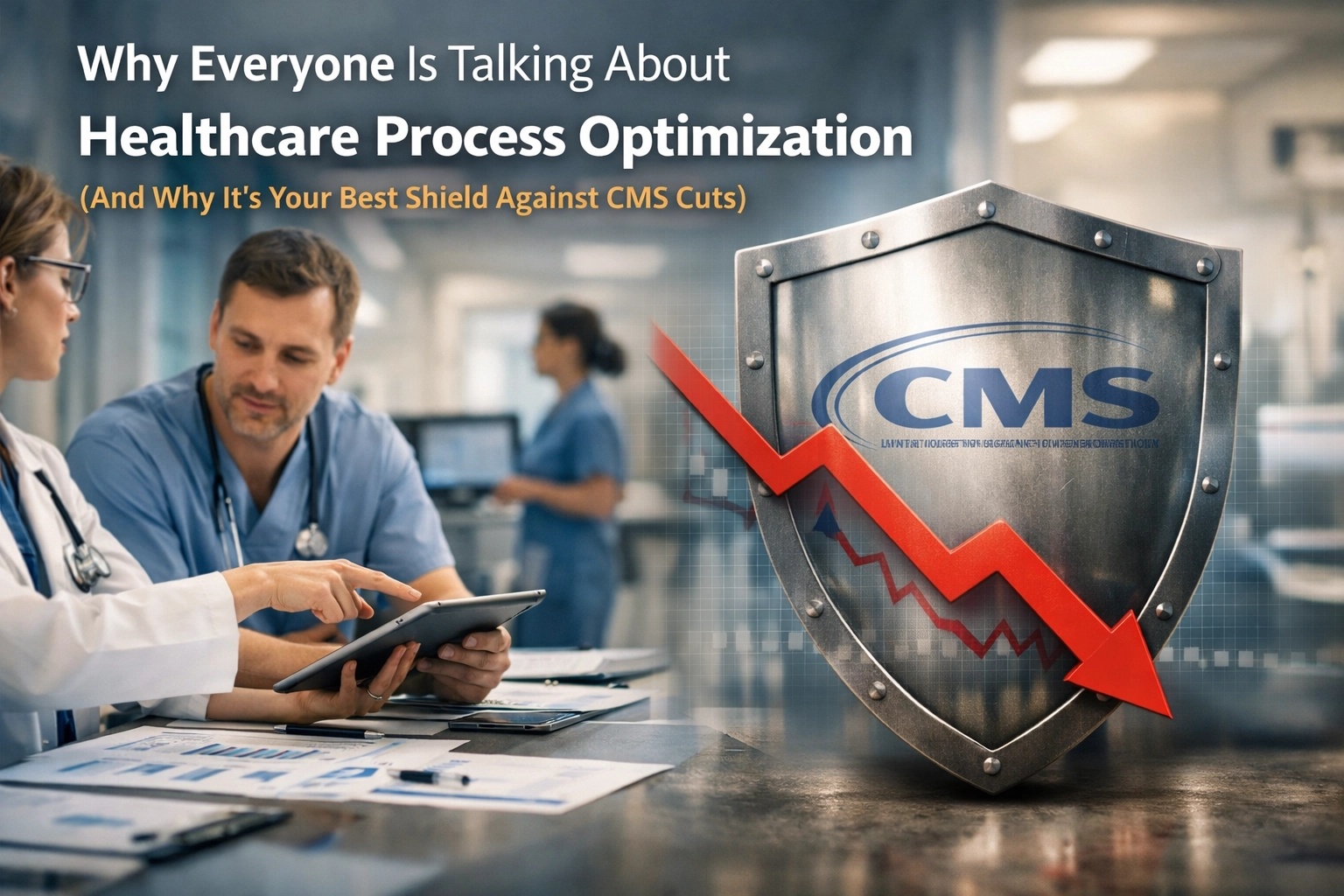
    • Automated Workflows: Use intelligent routing to ensure that the moment a clinician signs a note, it is moved to the appropriate next step based on its complexity and risk profile.
    • Data Dashboards: Invest in real-time visibility. Leadership should be able to see, at a glance, the status of all pending documentation and identify which teams are meeting timeliness standards and which are struggling.
    • Infrastructure Development: A robust healthcare infrastructure ensures that your systems talk to each other, reducing the need for manual data entry and the errors that come with it.

    The Role of Compliance Consulting

    Many agencies attempt to optimize their processes internally but find themselves blinded by their own organizational habits. This is where a healthcare compliance consulting strategy becomes invaluable. An external expert brings a fresh perspective and can identify risks that internal teams may have grown accustomed to.

    At LAP Strategies and Consulting, LLC, we specialize in helping agencies move from $2M revenue plateaus to scalable growth by refining these very systems. Our Intake to SOC framework is a prime example of how tightening a specific segment of the workflow can have a massive impact on overall revenue velocity.

    virtual-collaboration-setup.webp

    Frequently Asked Questions

    Q: How long does it typically take to see results from process optimization?
    A: While a full cultural shift takes time, most agencies see a measurable decrease in "days to sign" and "QA rework rates" within the first 30 to 60 days of implementing a structured framework.

    Q: Our clinicians are already overwhelmed. Won't more "process" just make it worse?
    A: On the contrary, a well-optimized process removes the cognitive load. By providing clear templates and reducing the number of times a clinician has to revisit an old chart, you actually give them back time to focus on patient care.

    Q: Is this framework applicable to small agencies, or only large ones?
    A: Process optimization is even more critical for smaller agencies. Larger organizations can often hide inefficiencies behind a large workforce; smaller firms must be lean and highly efficient to remain competitive and profitable.

    Q: Does technology replace the need for a QA team?
    A: Technology does not replace QA; it empowers it. Automation handles the clerical "checks," allowing your QA professionals to focus their expertise on clinical high-risk areas that require human judgment.

    Healthcare executive boardroom featuring an analytics dashboard showing upward trends and scalable growth.

    Concluding Insights

    The rework loop between clinicians and QA is not a permanent fixture of healthcare operations: it is a symptom of a fractured workflow. By adopting a structured framework that prioritizes standardization, proactive quality checks, and technological integration, your agency can achieve a state of operational excellence that supports both clinical quality and financial health.

    As the regulatory environment becomes increasingly stringent, the ability to produce "clean" documentation on the first pass will be the defining characteristic of successful healthcare firms.

    Actionable Steps for Leadership:

    1. Identify the Friction: Spend one week tracking exactly how many times documentation is sent back for correction and why.
    2. Audit Your Infrastructure: Determine if your current software facilitates a smooth workflow or if it creates additional manual steps.
    3. Engage a Strategic Advisor: Schedule an operational assessment to identify hidden revenue leaks in your current process.
    4. Set Clear KPIs: Establish a goal for "First-Pass Acceptance Rate" and make it a key performance indicator for both clinical and QA leadership.
    5. Standardize Training: Ensure that onboarding for new clinicians includes a deep dive into documentation requirements, not just clinical protocols.

    If you are ready to stop the cycle of rework and position your agency for scalable growth, let’s discuss how LAP Strategies and Consulting, LLC can build the systems you need for a more resilient future.